
Last updated November 23, 2026
 Sweep & inspection
 Caps & crowns
 Flue relining
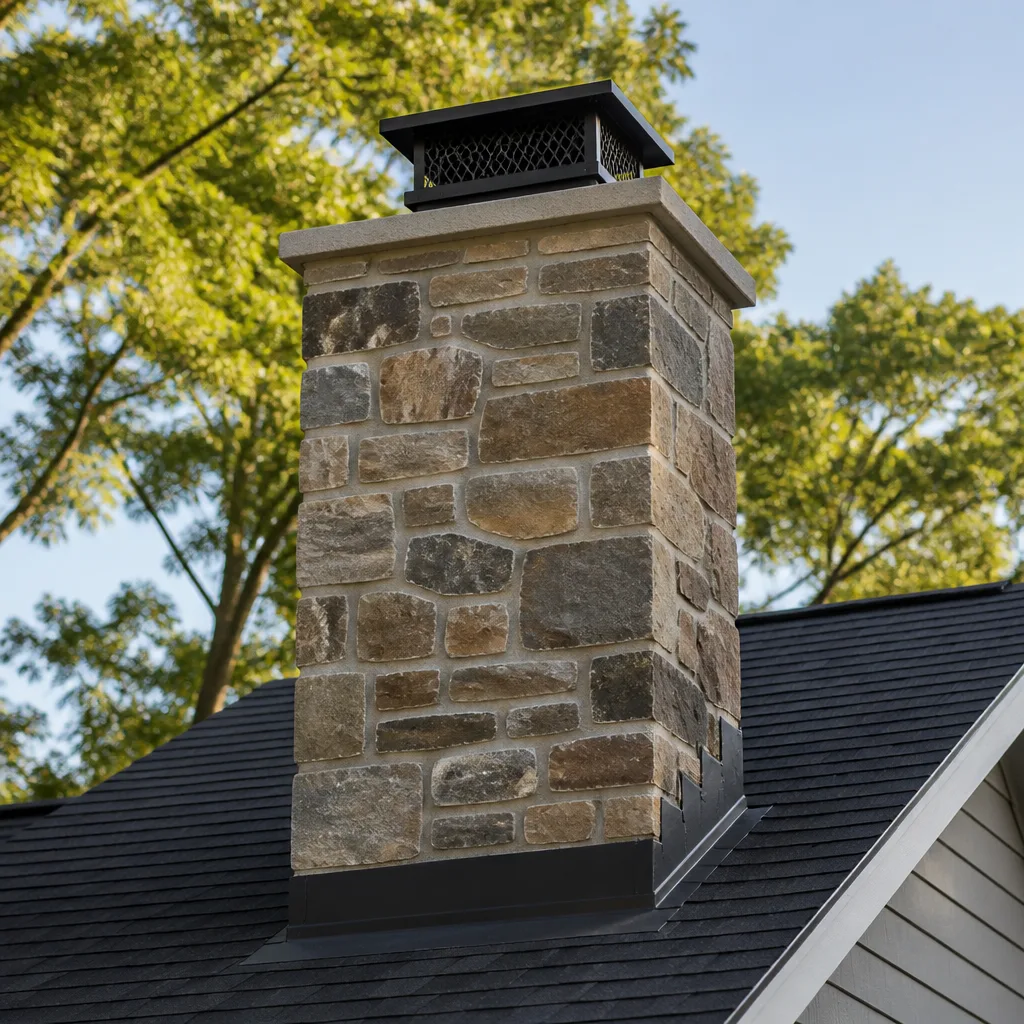 Masonry repair
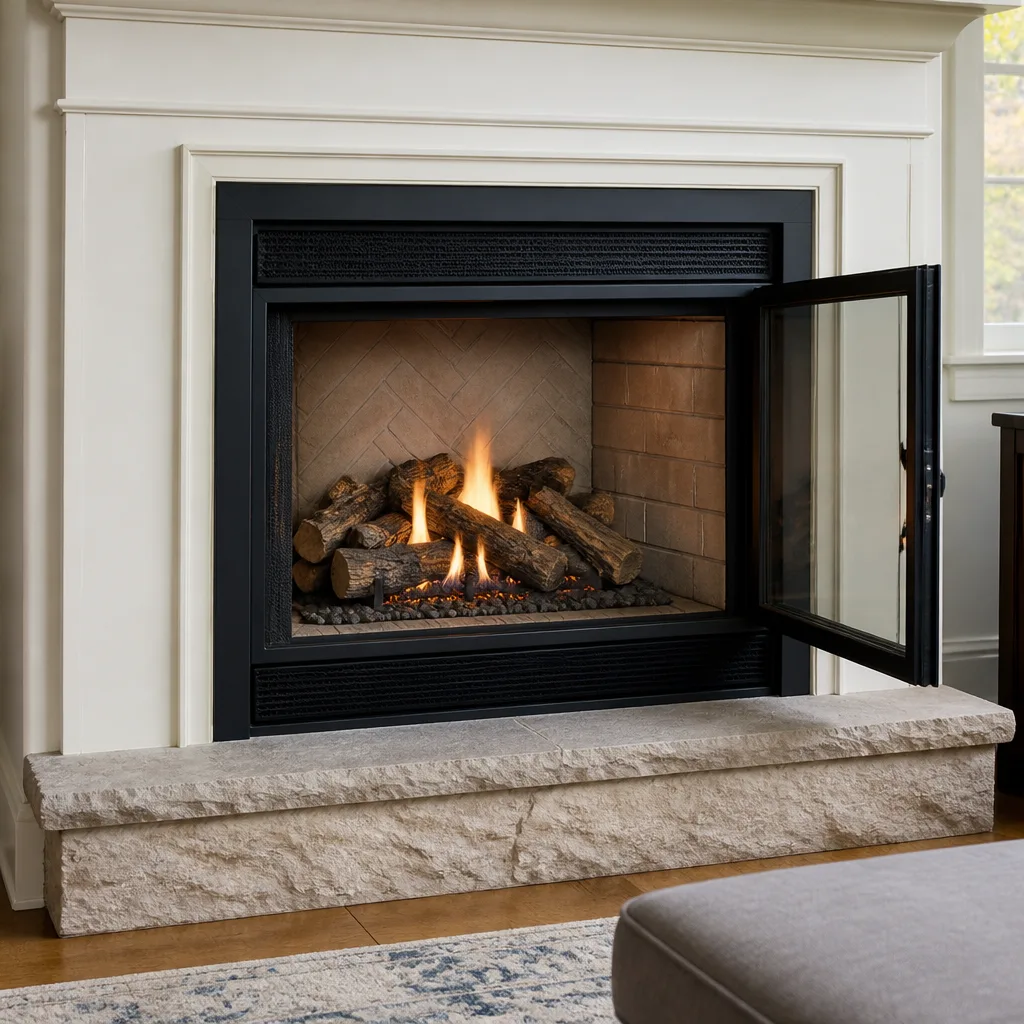 Gas fireplace service
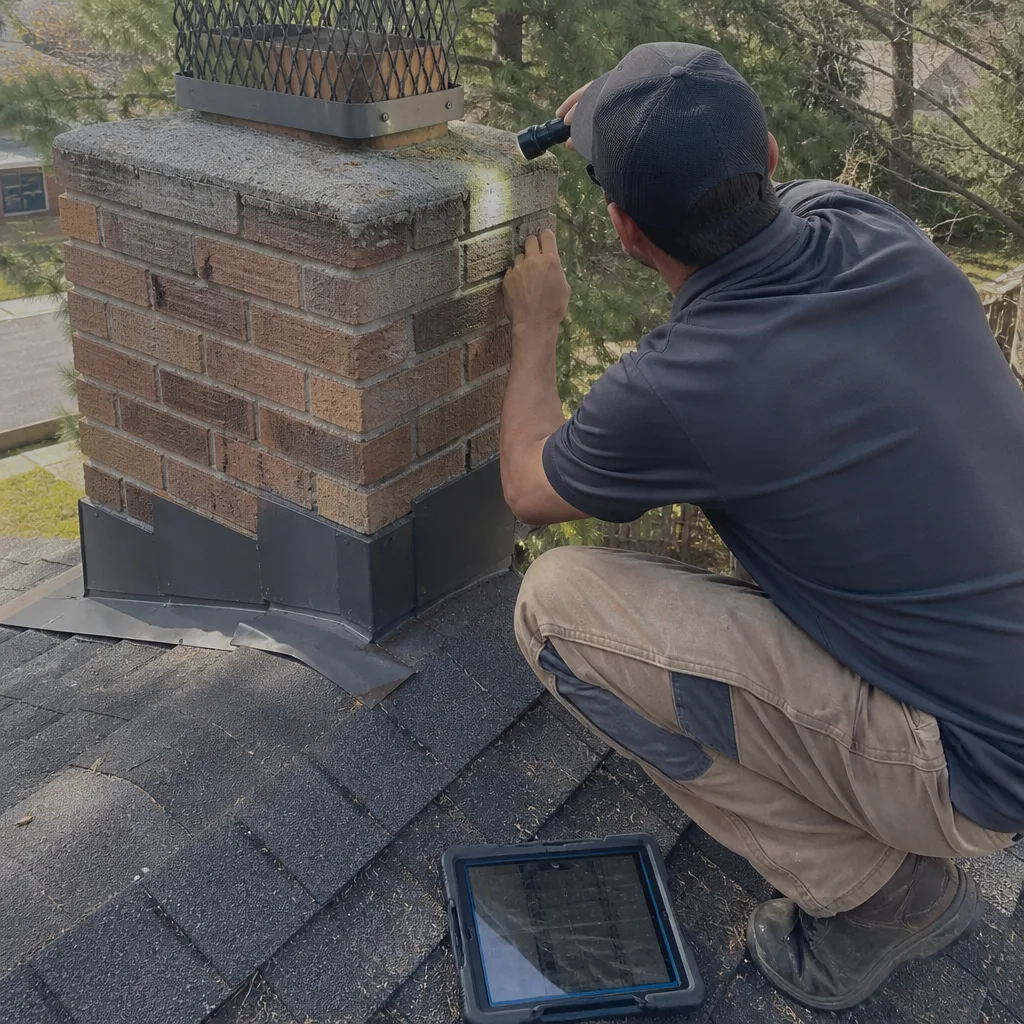
Level 1 sweep and inspection to the NFPA 211 annual standard - flue, crown, cap, and flashing checked and photographed
Chimney sweep logs do not sweep chimneys. They loosen some creosote - which then falls where a brush and vacuum still have to collect it.
Chimney Sweep Troubleshooting in Thornton: Common Problems and How to Fix Them
If your fireplace smokes back into the room, most online guides tell you to open the damper wider. That advice works for one narrow scenario and ignores the three culprits we find more often in Thornton: a blocked rain cap, negative pressure inside the house, and a smoke chamber that was never properly shaped. Widening the damper can’t fix any of them, and chasing the wrong symptom wastes your time while the real problem gets worse. Chimney trouble rarely sits where it shows. It moves downward through a chain: cap, crown, flue, firebox. This guide teaches you to read that chain before you call anyone or buy anything. Our technicians have up to 9 years of experience, and we’ll walk you through the sequence.
Quick Answer
Most chimney problems trace back to one of three failures: moisture getting past a bad cap or crown, creosote or debris blocking the flue, or a draft problem caused by wind, pressure imbalance, or a poorly built smoke chamber. Troubleshoot enough to identify which category you’re in, then stop. Anything involving cracked flue tiles, odor that smells like a fire when the fireplace is cold, or smoke rolling back under normal conditions needs a professional inspection, not a DIY fix.
Styles & brands we work with
- Sweep & inspection
- Caps & crowns
- Flue relining
- Masonry repair
- Gas fireplace service
Table of Contents
- How does a chimney draft actually work in Thornton?
- Why Thornton wind and pressure create draft problems you won’t find in lowland towns
- Symptom map: what each chimney problem is really telling you
- The cascade failure: how one bad cap destroys the crown, liner, and firebox in sequence
- What’s safe to monitor versus what means stop using the fireplace
- The decision tree: when troubleshooting ends and a professional inspection begins
- What do chimney repairs typically cost in Thornton?
- Prevention that actually works in this climate
How does a chimney draft actually work in Thornton?
A chimney drafts because warm air rises. Fire heats the column of air inside the flue, it expands and becomes lighter than outside air, and it exits the top. That upward pull gets stronger as the temperature difference between inside and outside grows, and weaker as it shrinks. Everything else about the chimney is either helping that physics or working against it.
Four things control the strength of that pull:
- Height. A taller flue pulls harder than a short one. Chimneys need enough rise above the roof line and above nearby roof surfaces to draft reliably.
- Temperature difference. A cold chimney on a warm day drafts poorly until the flue warms. That’s why the first fire of the season often smokes and later fires in the same week don’t.
- Leaks. Every crack, gap, or open joint in the flue and smoke chamber lets air in where it shouldn’t be. Air that leaks in after the firebox dilutes the hot gas and weakens the pull.
- Competing pressure. The house itself pushes back. Bathroom fans, kitchen exhaust, a dryer, a furnace, any appliance that pushes air out of the house has to pull replacement air in. It will pull it down your chimney if that’s the easiest path.
Thornton sits at an altitude where that temperature-difference piece behaves differently than at sea level. Combustion burns less efficiently with thinner air, which means the fire produces relatively more cool smoke and the flue has less heat to work with. That’s not a flaw in your fireplace. It’s a reason draft problems show up earlier here, and a reason a sweep and inspection before the burning season is worth more in Thornton than the same appointment in a town at lower elevation.
If you suspect a flue or smoke chamber defect is behind weak draft, a chimney repair assessment is the honest starting point. The chimney draft is either pulling or it isn’t, and the camera tells you which parts are responsible.
Why Thornton wind and pressure create draft problems you won’t find in lowland towns
Wind across a chimney top does two opposite things depending on where it hits. A steady wind passing over the top of the flue, unobstructed, can actually help pull smoke out. The same wind striking the side of the chimney creates a downdraft that pushes air back down. The difference is the cap and the height of the flue above the roof.
On exposed roofs where the wind has a clear run at the chimney, homeowners notice a predictable pattern: fires burn fine in calm weather and smoke in gusty conditions. That pattern usually points to one of three fixes, in order of likelihood:
- A missing, damaged, or wrongly sized rain cap. A cap that’s too small for the flue, or one with clogged mesh, doesn’t block much wind. It just makes the downdraft worse by putting obstacles right where the draft needs to exit.
- Flue height. A chimney that barely clears the roof line has no protection from air moving across the ridge. Adding height, done properly, restores the draft.
- A nearby structure or tree that changes the wind pattern. The fix is usually a taller flue or a wind-resistant cap design, not gimmicks.
Pressure inside the house matters as much as what’s happening outside. A modern house that’s tightly sealed has no path for makeup air, so any exhaust fan pulls the pressure down and the chimney is where that air comes from. If your fireplace smokes only when the kitchen or bath fan runs, the chimney is fine and the house is starving for air. Crack a nearby window as a test and see whether the smoking stops. If it does, you’ve found your cause without touching the chimney. The local pro we connect you with can confirm the fix and won’t sell you a liner to solve an air problem. Our cap-and-crown work uses professional-grade materials from brands like Copperfield because a cap has to survive the wind it’s designed to block. Call (844) 443-4565. We answer 24/7. Fast dispatch from 7am to 7pm, Sunday through Friday.
Symptom map: what each chimney problem is really telling you
Every symptom has a short list of real causes, and matching the symptom to the cause is what saves you from spending money on the wrong repair. Here’s how to read the most common ones.
Smoke rolls back into the room
- Flue is cold on a warm day (warm the flue first and see if it clears).
- Rain cap is blocked by debris, a bird nest, or a collapsing screen.
- House pressure is negative from a fan or a tightly sealed house.
- Smoke chamber is too shallow or its shape is failing, so smoke can’t expand and slow before it enters the flue.
- Flue is undersized for the firebox opening, or the firebox has been enlarged without matching flue work.
Chimney smells like fire or soot when the fireplace is cold
That smell is a sign of creosote and soot in the flue, plus a pressure reversal pushing house air up or chimney air down. When the fireplace is in use, the draft carries the smell out. When it’s cold, the draft reverses and the smell comes inward. A blocked cap and a house that’s too tight both make the reversal stronger. The fix is cleaning plus restoring the draft, not masking it with a deodorizer.
The fire is slow to start and lazy once it’s going
- Too little creosote has accumulated inside the flue (draft is normal). More likely, too much creosote and soot has built up and the flue is narrowed.
- Wet or unseasoned wood is adding moisture to the fire and cooling the flue.
- A gap or crack in the flue is leaking air and diluting the pull.
Visible cracking in the firebox or on the exterior
Cracks in the firebrick or mortar of the firebox are not cosmetic. They let heat reach the masonry behind the firebrick, and heat reaching masonry it shouldn’t reach is how fire can spread into the structure. Cracks in the chimney exterior at the crown or just above the roof line often trace to moisture. If you see either, stop using the fireplace until a professional has looked at it. A fireplace repair inspection tells you whether the cracks are surface or structural, and which parts of the firebox need attention.
Water stains, rust, or a damp smell
Water is getting past the cap, the crown, or the flashing. This is the most common and most expensive category because it’s often ignored longest. Every wet season it does more damage.
The cascade failure: how one bad cap destroys the crown, liner, and firebox in sequence
The reason a small leak becomes a large repair is that chimney materials fail in a predictable order. Most homeowners learn this sequence after the fact. Read it now and you can break it early.
Step 1: The cap fails
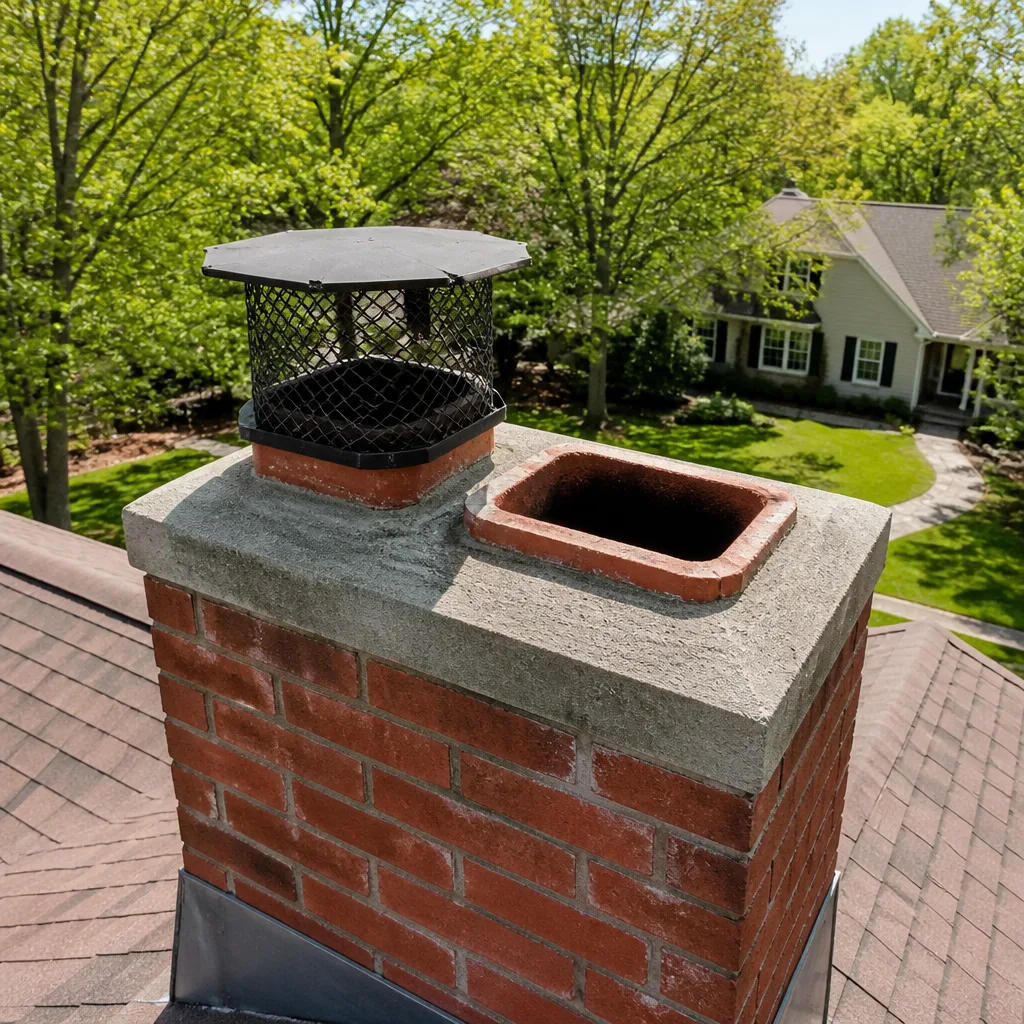
A cap is a roof for the flue. When it’s missing, rusted through, or bent by wind, rain and snow go straight into the flue. Nothing shows on the outside yet. Down below, water starts soaking the top few courses of flue tile and the mortar around them.
Step 2: The crown cracks
The crown is the sloped cap of concrete or masonry at the very top of the chimney, designed to shed water away from the flue. When the cap is gone, the crown freezes and thaws over successive seasons. Water gets into small cracks, expands when it freezes, and opens the cracks wider. Once the crown is cracked, water enters the masonry of the chimney itself with no plug at all.
Step 3: The flue tiles break down
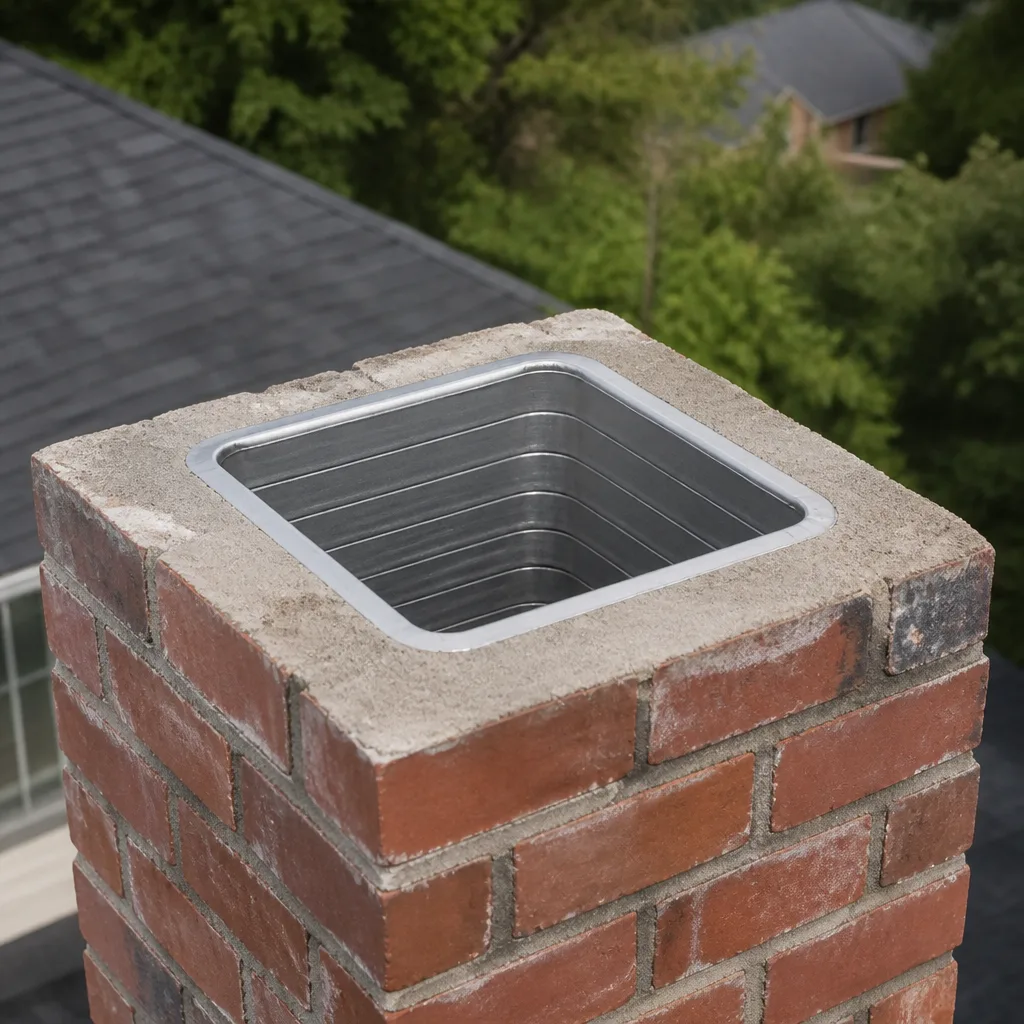
Clay flue tiles hate water. Freezing and thawing spalls the tile surface, and the mortar joints between tiles crack. Once moisture and combustion gases work into the spaces between the tiles, the joint seals fail. That’s when a flue goes from sound to compromised, and where HeatShield comes in. HeatShield resurfacing resurfaces a deteriorated flue from the inside without a full liner replacement in some cases, and it’s a repair option many sweep-only outfits don’t offer. We use HeatShield because it lets us address damaged flue tiles without tearing out work that doesn’t need to come out.
Step 4: The firebox and masonry absorb the damage
Water and gas entering from the top work down through the masonry. Mortar softens. Cracks appear in the firebox and chimney exterior. Rust shows on the damper or the firebox steel. At this point the fix is no longer a cap and a sweep. It’s structural. A single cap, replaced before the crown cracks, would have stopped the whole sequence for a fraction of the cost.
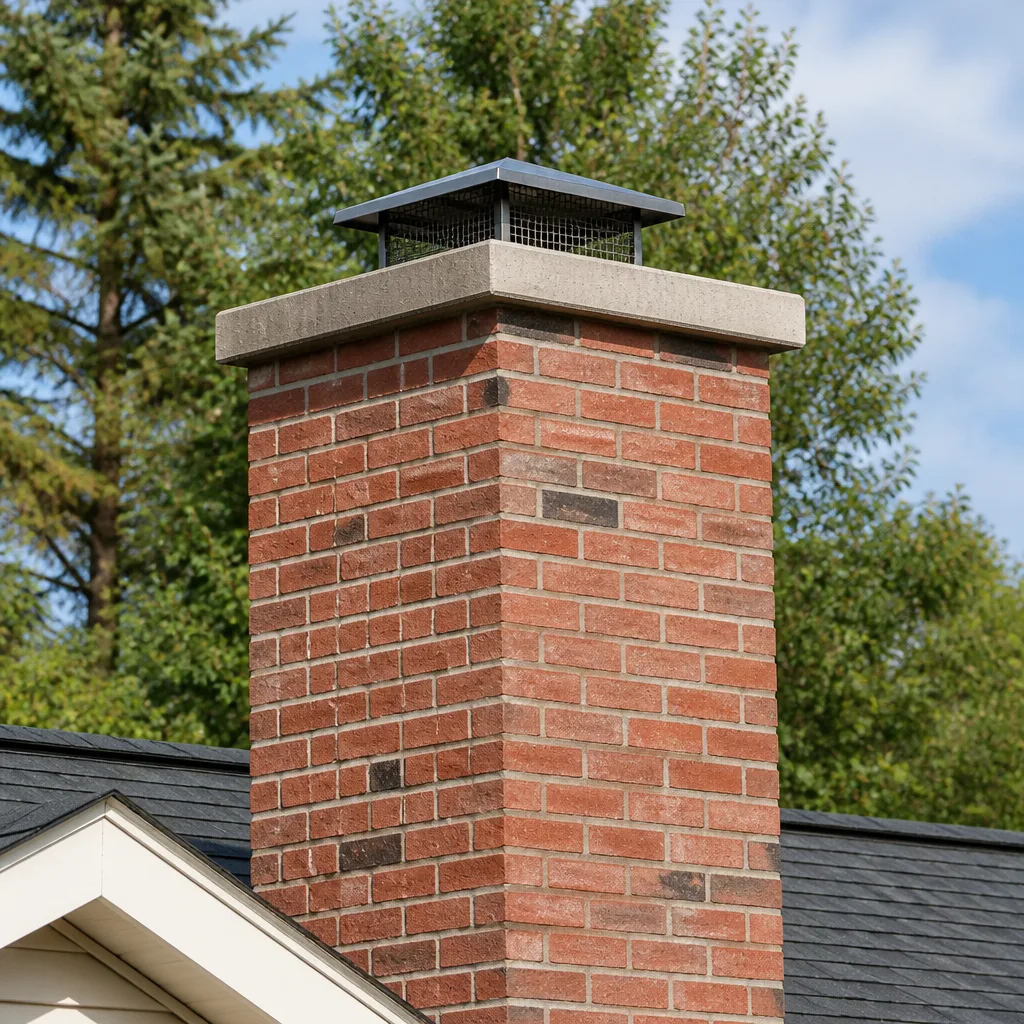
That’s why we treat caps and crowns as the front line of chimney health, not an accessory. Our Chimney Cap & Crown installations use professional-grade materials including Copperfield and Olympia Chimney components because the cap has to survive the weather that damaged the last one. If the crown is already cracked, we repair or replace it before the flue damage continues. Call (844) 443-4565 for a free estimate. We answer 24/7. Fast dispatch from 7am to 7pm, Sunday through Friday.
What’s safe to monitor versus what means stop using the fireplace
Not every symptom is a same-day emergency, and pretending otherwise erodes trust. At the same time, some symptoms mean the fireplace should stay cold until a professional sees it. Here’s the honest divide.
Safe to monitor briefly
- Occasional smoke on the first fire of the season that clears once the flue warms.
- Mild soot smell when the fireplace is cold, if the chimney was recently used and the smell fades with ventilation.
- Light surface rust on a damper that still opens and closes freely.
- A missing cap screen, as long as the flue itself isn’t blocked and no water is getting in.
Stop using the fireplace, then call
- Smoke rolling back into the room under normal conditions, even after warming the flue.
- Cracks in the firebox brick, mortar, or the interior surfaces you can see.
- Water stains, rust, or crumbled masonry inside the firebox or anywhere on the chimney.
- A strong soot or fire smell that doesn’t fade, especially if the fireplace is cold.
- Creosote visible as a thick, crusty, or glazed coating inside the flue. Glazed creosote is the most flammable form and is a fire risk until it’s removed.
- Any carbon monoxide alarm event during or shortly after a fire. Open a window, leave the house, and treat it as a safety issue.
Carbon monoxide is the risk people underestimate. A blocked or compromised flue doesn’t just produce a smoky fire; it can send combustion gases the wrong way. If any symptom on the second list is present, the fireplace should stay cold until an inspection says otherwise. Do not try to fix a blocked flue from the roof yourself. That’s ladder work, height work, and dangerous. The local pro is licensed and insured as their state requires and has the equipment to inspect safely. A chimney inspection with a camera is the reliable way to know what’s going on.
The decision tree: when troubleshooting ends and a professional inspection begins
Troubleshooting has a floor. Past it, the right move is to stop guessing and get a look at the inside of the flue. Run through these questions in order.
- Is the fireplace sending smoke, water, or gas where it shouldn’t? Smoke rolling back, water stains, or a carbon monoxide alarm means stop, don’t diagnose further, and book an inspection.
- Is the cap present, intact, and screened? If the cap is missing, damaged, or clogged, that’s the first fix regardless of anything else. This is where the cascade starts.
- Does the fireplace draft when you warm the flue? Warm it with a rolled newspaper held near the damper opening. If draft returns, you’re dealing with a cold-flue problem. If it doesn’t, keep going.
- Does the fireplace draft when you crack a window? If yes, the problem is house pressure, not the chimney. Fix the makeup air.
- Is there visible soot, creosote, or debris in the flue opening? If the buildup is heavy, a sweep and inspection are the next step, and no other troubleshooting is useful until the flue is clean.
- Is there visible cracking in the firebox or on the chimney exterior? If yes, stop. Repairs are needed before the fireplace is used again.
- None of the above, and the symptoms are mild? Book a chimney sweep and let the camera tell you what’s really happening. The sweep includes the sweep itself and a look inside the flue, and we don’t recommend anything we can’t show you.
Notice that most paths end at the same place: a professional inspection with a camera. Homeowners often want to avoid that step because they’ve heard about high-pressure upsells on expensive repairs. That worry is fair, and it’s why the estimate should show you the footage and the findings before it recommends anything. If a cracked crown can wait until spring, the report should say so. If firebox cracks mean no more fires, the report should say that too, plainly. We inspect before we recommend, and the photo report is yours to keep.
What do chimney repairs typically cost in Thornton?
These are typical estimate ranges based on the scope of work, not fixed prices. The written estimate sets the final price per job, and the estimate is free. Market conditions in the north metro area, the height of your chimney, and the materials involved all move the number.
Typical chimney repair and sweep ranges
| Service | Typical estimate range |
|---|---|
| Standard chimney sweep and camera inspection | $180 – $350 |
| Cap and crown inspection with repair | $250 – $650 |
| Crown replacement | $400 – $1,200 |
| Chimney cap installation | $250 – $550 |
| Fireplace repair (firebox, damper, mortar) | $300 – $1,500 |
| HeatShield flue resurfacing | $1,200 – $3,500 |
| Structural chimney repair or rebuilding | $1,500 – $6,000+ |
Two things drive the gap between the low and high ends. The first is how far the cascade has gone. A cap fixed early is at the bottom of the range. The same chimney with a cracked crown, spalled flue tiles, and firebox damage climbs the ladder. The second is access. A chimney that’s easy to reach from the roof is cheaper to work on than one with a steep, tall, or obstructed path.
This is the reason to fix small problems before they become structural ones. A cap and a crown inspection costs less than a flue resurfacing. A sweep and inspection costs less than a firebox rebuild. We’ve watched the pattern enough to be direct about it: the cheapest chimney repair is the one done before the problem cascades.
Prevention that actually works in this climate
Most of what actually protects a chimney in Thornton is boring and inexpensive. Here’s what moves the needle.
Annual sweep and inspection
An annual sweep and camera inspection catches the small problems before the expensive ones. The sweep removes creosote and soot, and the inspection finds the cracked tile, the loose cap, or the failed crown that’s already started. A sweep once a year, before the burning season, keeps the flue in known condition. During heavier use, twice is reasonable.
A proper cap
The cap is the single highest-value piece of chimney hardware you own. It keeps rain, snow, birds, and wind-powered debris out of the flue. It should be sized to the flue, screened, and attached so wind can’t lift it. Our cap and crown installation work uses professional-grade brands because caps fail more often than they should.
A sound crown
The crown is the sloped concrete cap at the top of the chimney. It should overhang and slope so water runs off, not in. If it’s cracked, replacing it stops water at the top of the whole system. That’s the single best place to break the cascade.
Burn dry, seasoned wood
Wet wood is the fastest way to build heavy creosote. Seasoned wood burns hotter, throws less smoke, and produces less soot. That matters more here than in lower-elevation towns because the thinner air makes combustion efficiency less forgiving. Split it early and let it stay dry until the season.
Address house pressure
If the fireplace only smokes when a fan runs, fix the pressure. That might mean a makeup air answer for the tightly sealed house, or simply knowing which fans to run less while the fire is going. It’s a draftsman-level fix, not an expensive one, and it’s cheap to test.
Common Mistakes to Avoid
- Opening the damper wider to stop smoke rollback. The damper is one lever and it only helps if the flue is warm and the draft path is clear. If it’s not, opening the damper more just seems to do nothing and you keep burning.
- Treating the cap as optional. A missing cap is the start of the cascade. Every wet season without one does more damage to the crown, flue tiles, and firebox.
- Braving the roof yourself. Chimney work is roof work, height work, and often an unsound surface underfoot. Doing it yourself is not worth the risk, and one fall can change everything.
- Burning wet wood because it’s what’s on hand. Wet wood is a direct route to heavy creosote and a weakening draft. The flue fills faster and the fire fights the draft instead of feeding it.
- Letting a soot smell go unaddressed. A persistent soot or fire smell in a cold fireplace usually points to a blocked cap or negative pressure. Ignoring it lets the underlying cause continue.
- Booking the cheapest sweep and stopping there. A sweep without a camera inspection only cleans. If a cracked tile or failed crown is already there, a sweep alone won’t find it. Ask what’s included and whether the inspection comes with photos.
- Assuming a repair recommendation is an upsell. Ask to see the camera footage. A professional who can show you the compromised tile is a professional to trust. A recommendation without evidence isn’t one.
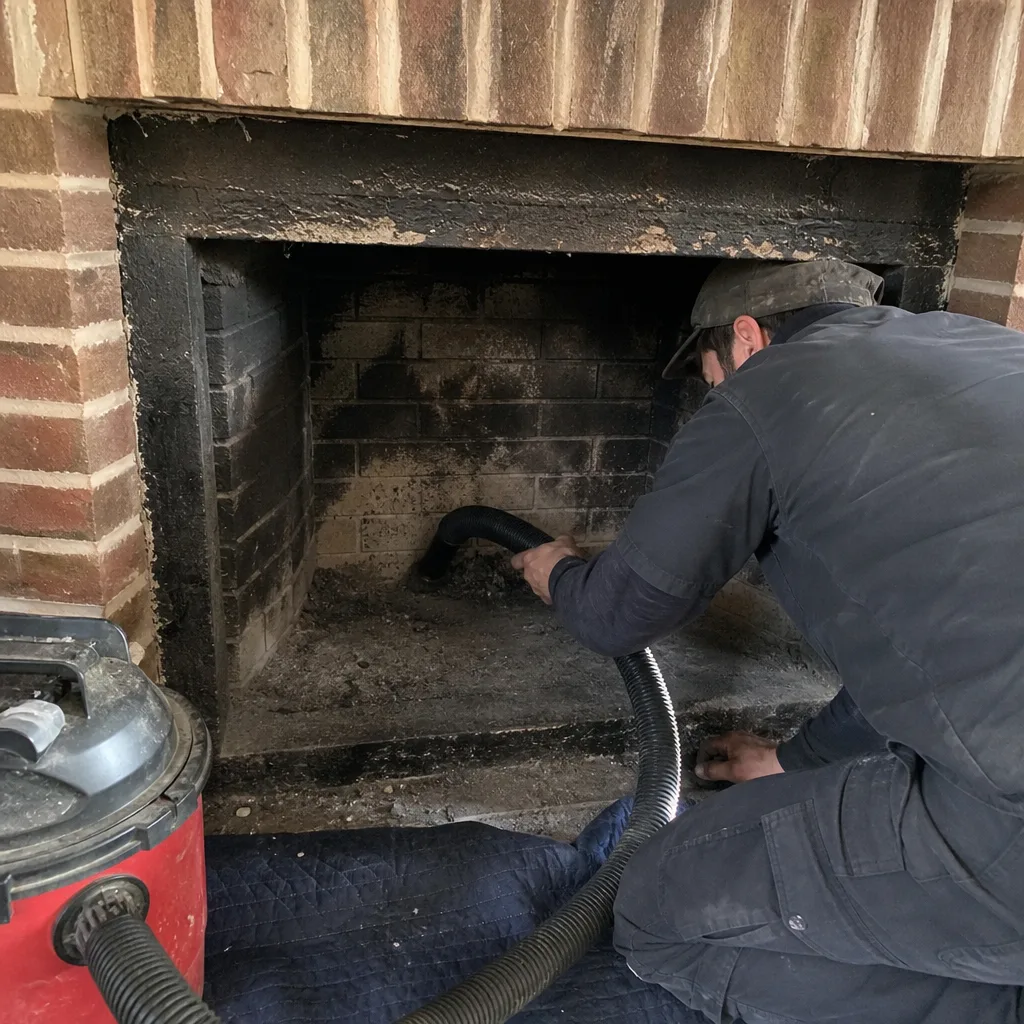
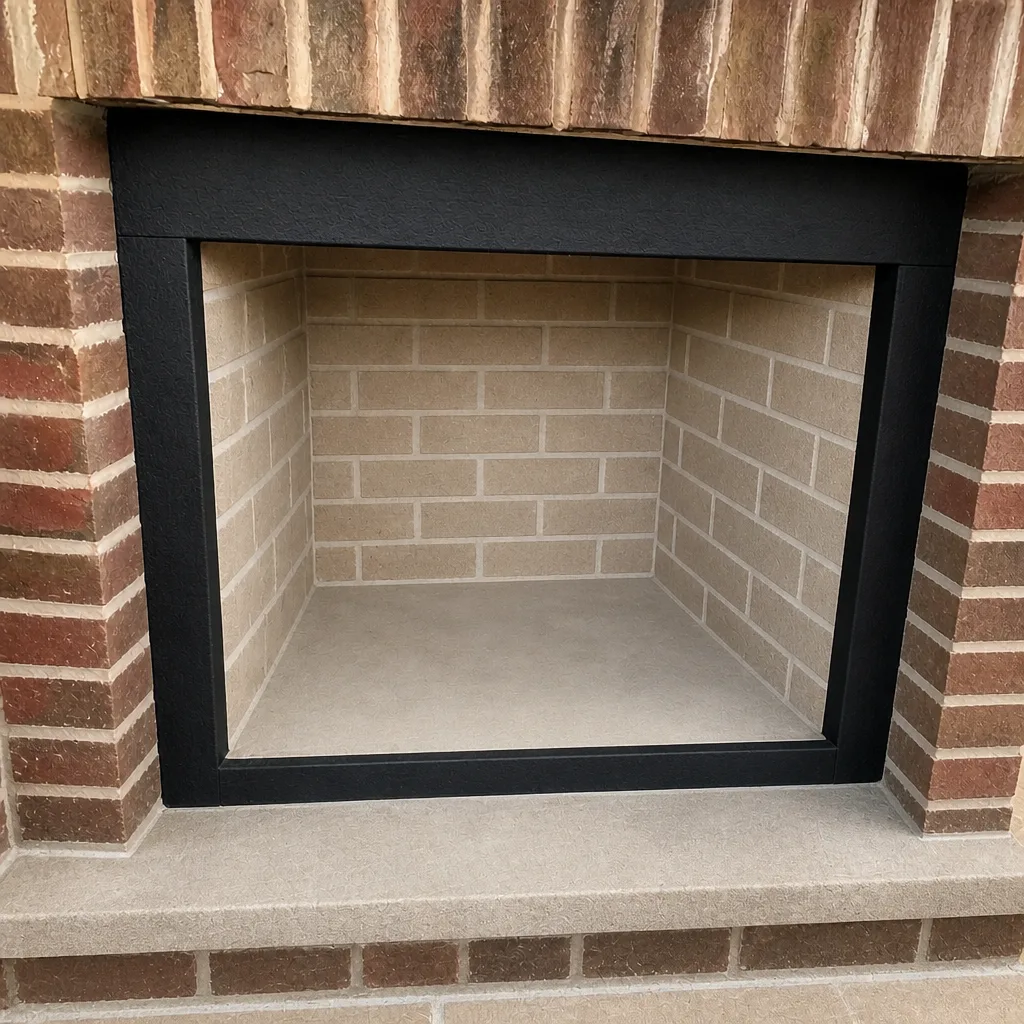
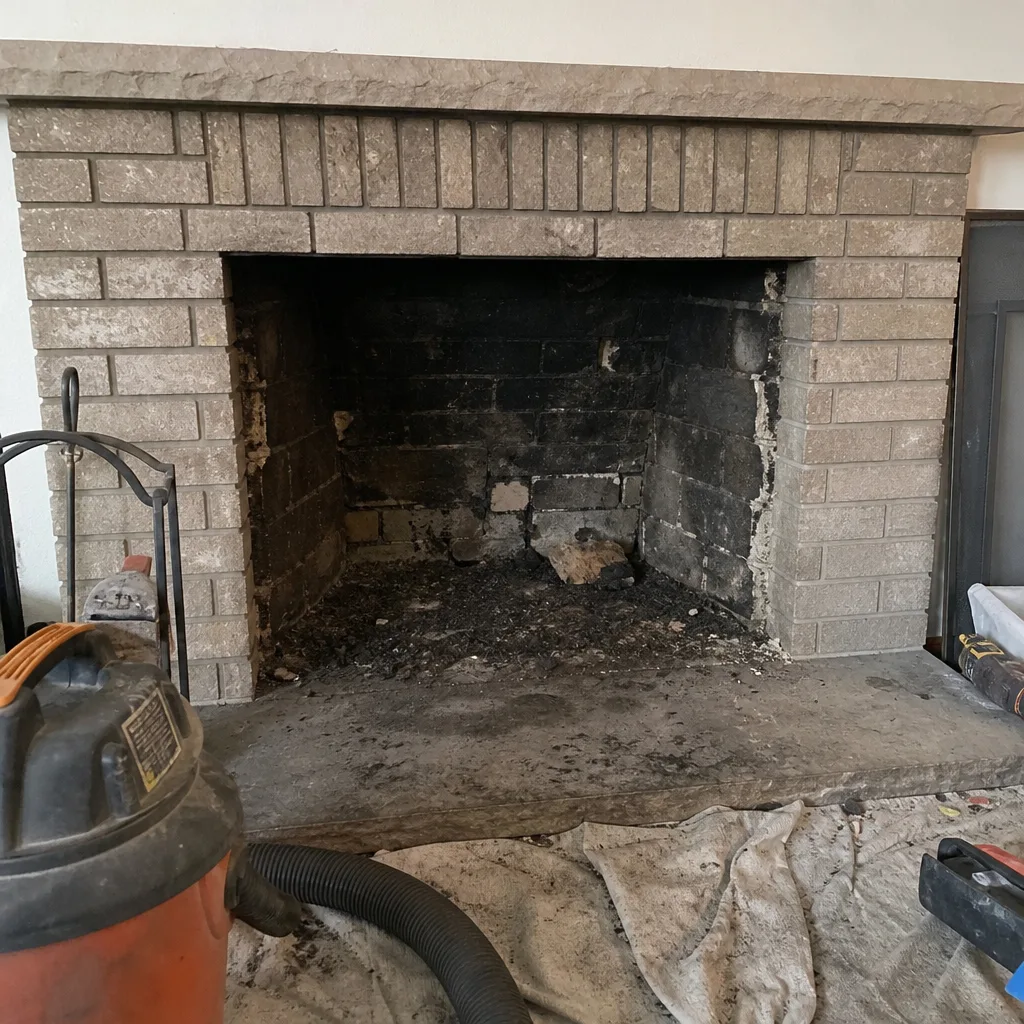
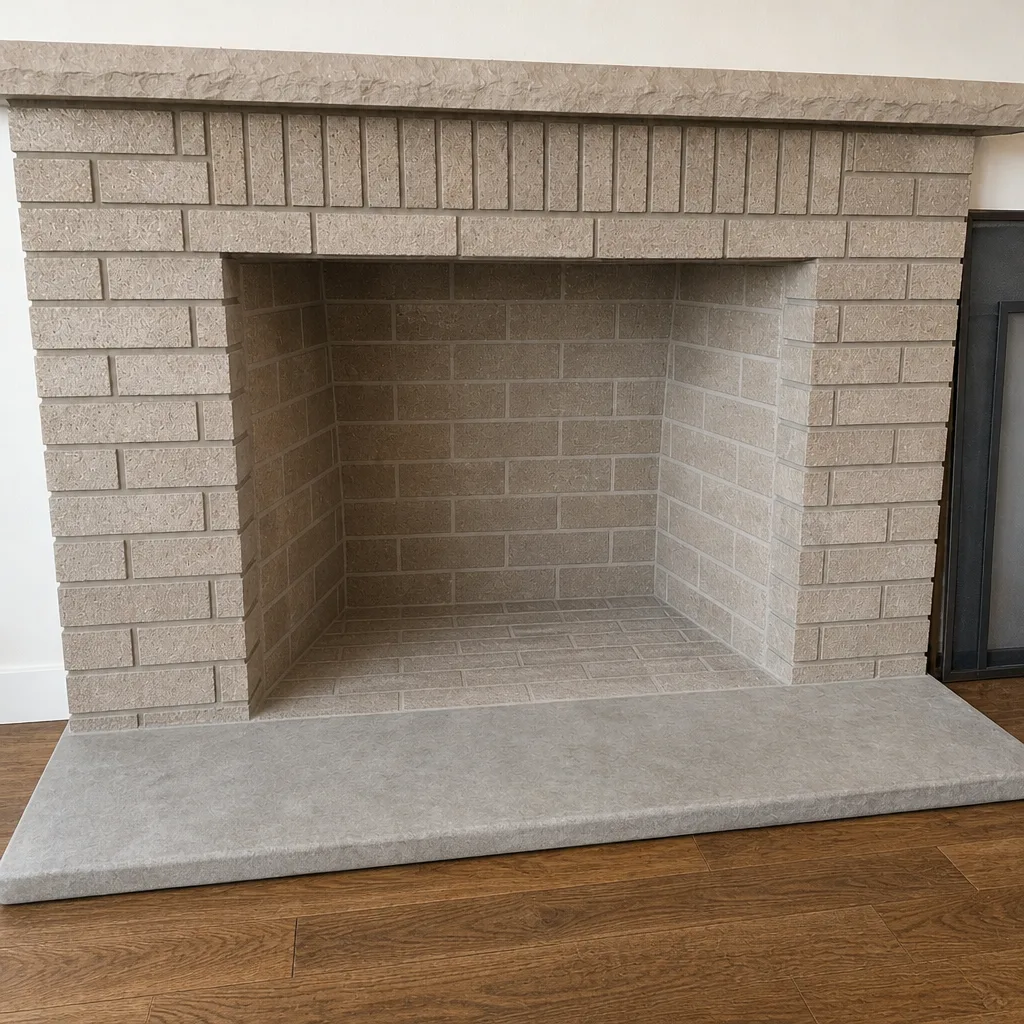
See the difference
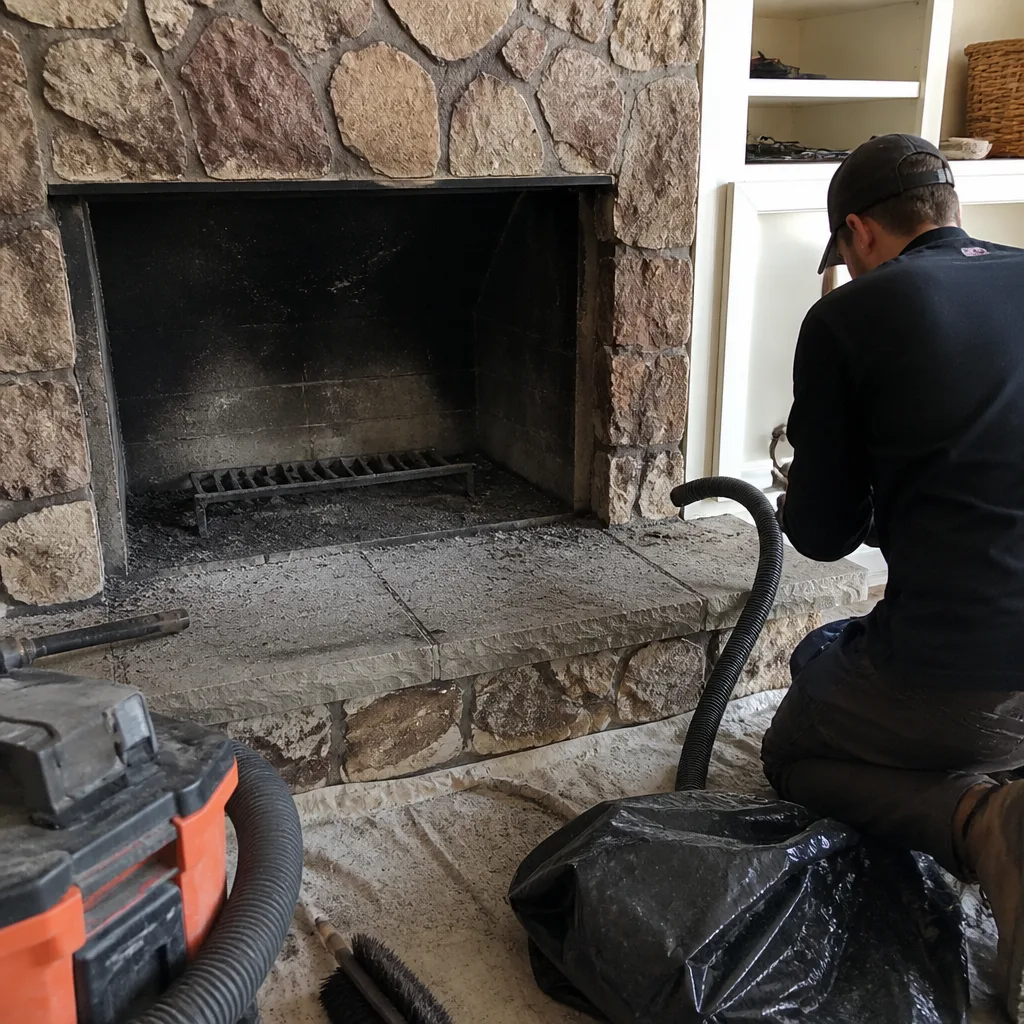 Before
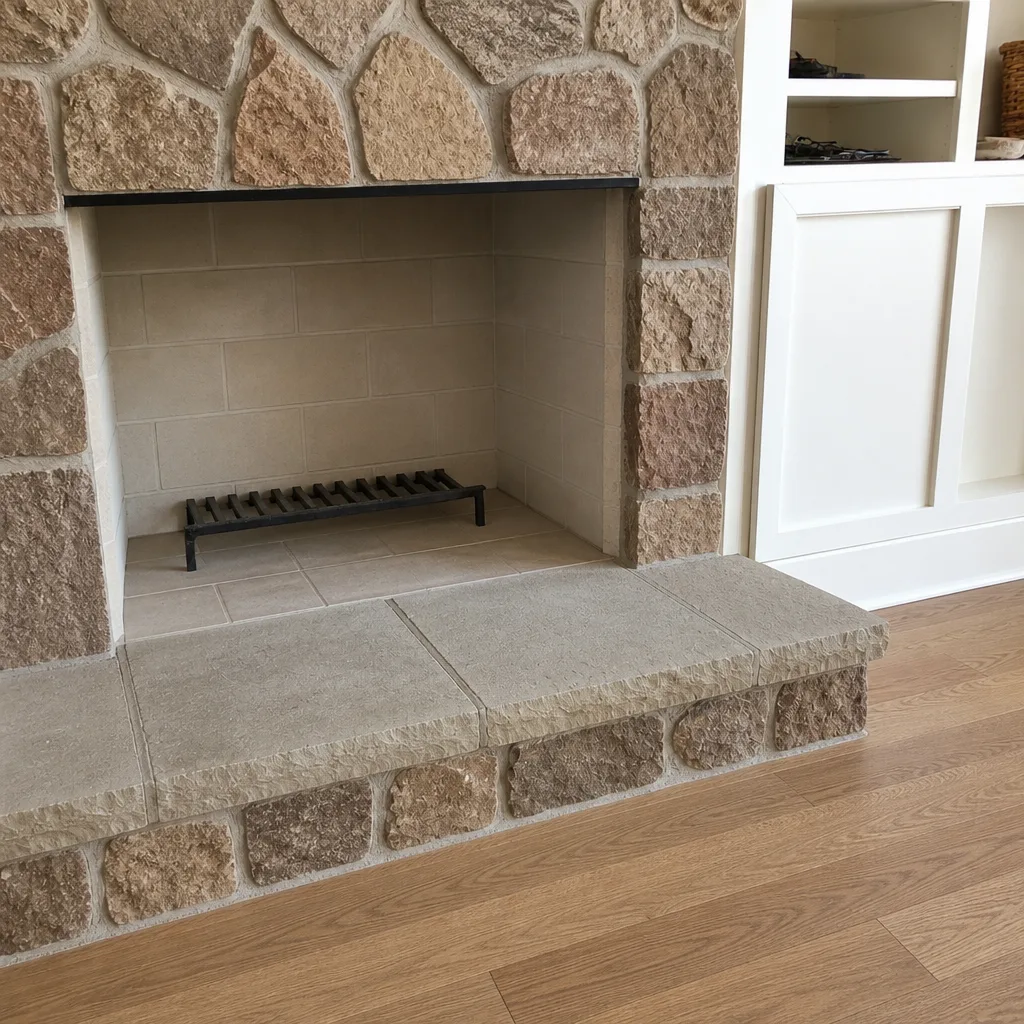 After
 Before
 After
 Before
 After
When to Call a Professional
Call before you burn if the fireplace smokes under normal conditions, the firebox or chimney exterior shows cracking, water stains appear anywhere on the chimney, or the soot smell in a cold fireplace won’t fade. Call now, and don’t burn, if a carbon monoxide alarm goes off during or shortly after a fire. For routine care, book a sweep and inspection before the burning season starts. Thornton Chimney Sweep Co offers free estimates in Thornton. Call (844) 443-4565. We answer 24/7. Fast dispatch from 7am to 7pm, Sunday through Friday.
Frequently Asked Questions
Once a year, before the burning season, is the standard. If you burn heavily or burn wet wood, twice a year is better. An annual sweep with a camera inspection is the cheapest way to catch a cracked crown, a failed cap, or heavy creosote before it becomes a structural cost.
Because the fan is pulling air out of a tightly sealed house, and the chimney is where the replacement air comes in. That pulls air down the flue and pushes smoke back into the room. Cracking a nearby window should clear it. If it does, the chimney is fine and the house pressure is the fix.
It depends on the condition of the flue itself. A deteriorated clay flue with spalled tiles and cracked joints can often be resurfaced with HeatShield rather than fully relined. A chimney with a collapsed liner or a flue that’s undersized for the fireplace needs a full liner. We recommend the resurfacing route when it’s safe and the full liner when it isn’t, and you’ll see the camera footage before we recommend either.
Yes, for a cold chimney. Warm the flue with a rolled newspaper held near the damper opening before you load the fire. If the fireplace still smokes after the flue warms and the fire has been going for several minutes, that’s a real draft problem and not a cold-flue start.
Creosote builds up in the flue, and heavy or glazed creosote is a fire risk. The cap and crown also go undetected, and a small water leak turns into a cracked crown, then spalled flue tiles, then firebox damage. The sweep is the cheapest step in the chain. Call (844) 443-4565 for a free estimate.
No. Cracks in firebrick or mortar let heat reach masonry behind the firebrick, and heat reaching masonry it shouldn’t reach is how fire spreads into the structure. Stop using the fireplace and have it inspected before you burn again.
The Bottom Line
Chimney problems don’t start where they show. They start at the top and work down. A missing cap lets water in that cracks the crown, which damages the flue tiles, which then reaches the firebox. If you stop that chain at the cap, the repair stays small. If you don’t, the fix climbs the cost ladder. Read your symptom honestly, warm the flue and test the pressure before you diagnose anything, and know which symptoms mean stop burning. Then let a professional see the inside of the flue with a camera. We inspect before we recommend, and the estimate is free. We handle the full chimney, from the firebox floor to the crown cap, with professional-grade materials.
One call covers cleaning, inspection, and any repair that follows. If you’re in Thornton and you’re not sure what you’re looking at, call (844) 443-4565. We answer 24/7. Fast dispatch from 7am to 7pm, Sunday through Friday. The estimate is free, and the written estimate sets the price. When you’re ready to book a Thornton Chimney Sweep Co visit, the team will confirm the details and get you on the schedule.
Written by the team at Thornton Chimney Sweep Co.