
Last updated November 23, 2026
 Sweep & inspection
 Caps & crowns
 Flue relining
 Masonry repair
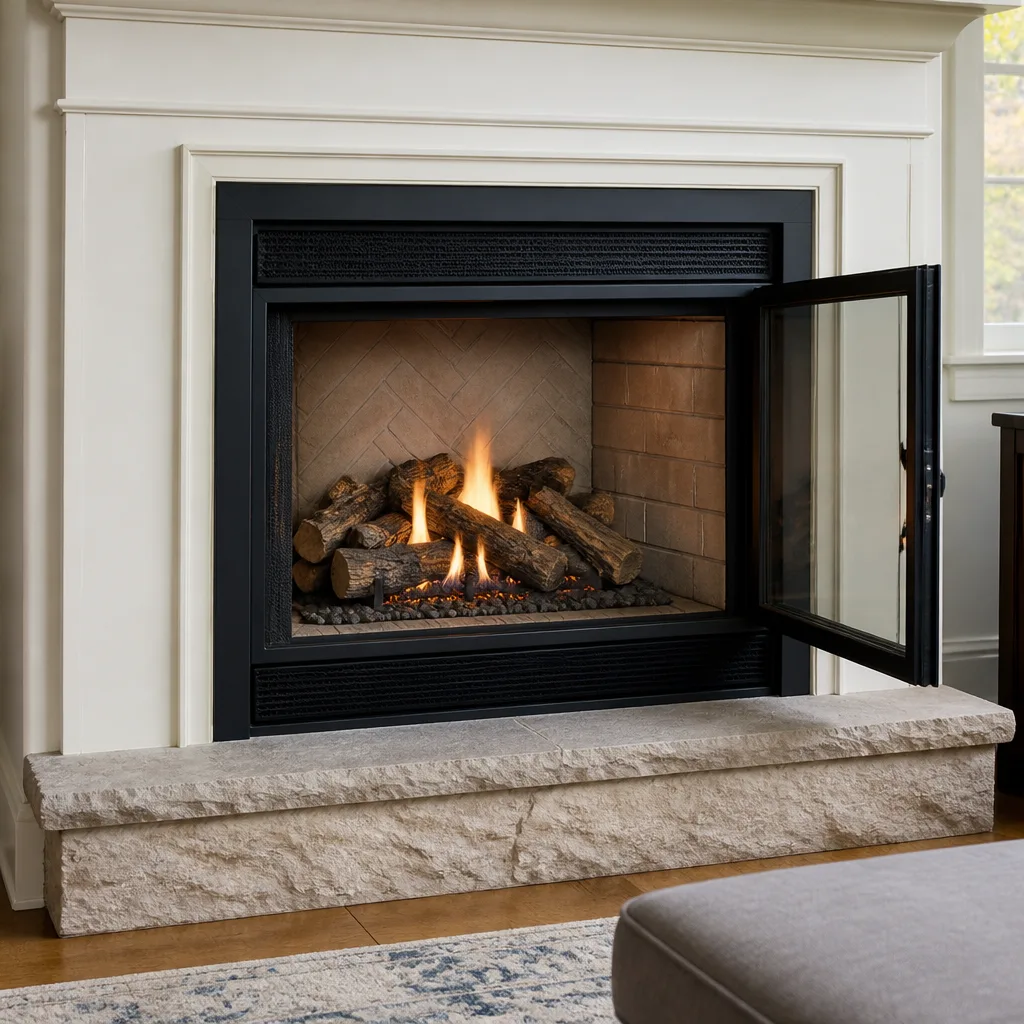 Gas fireplace service
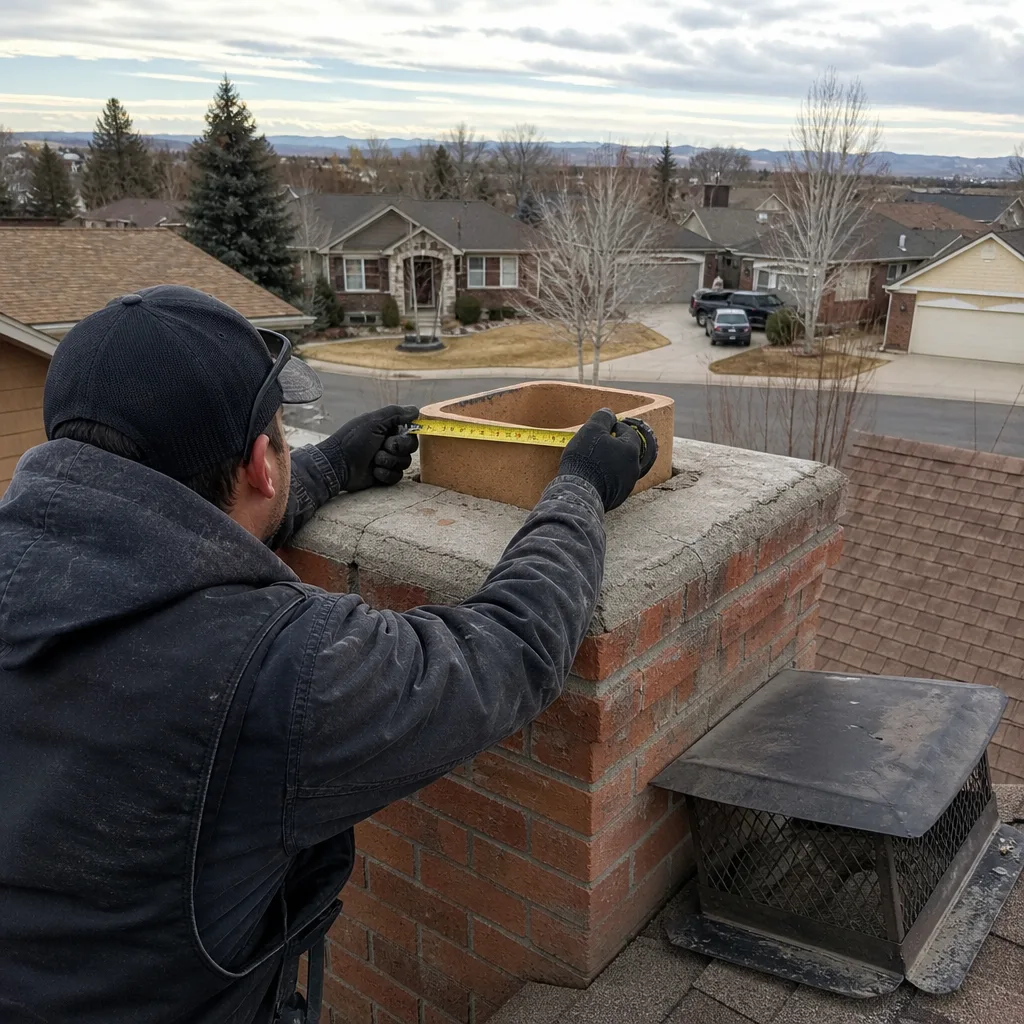
Level 1 sweep and inspection to the NFPA 211 annual standard - flue, crown, cap, and flashing checked and photographed
Chimney sweep logs do not sweep chimneys. They loosen some creosote - which then falls where a brush and vacuum still have to collect it.
The Complete Guide to Chimney Cleaning in Thornton
Most chimney problems we find in Thornton didn’t come from skipping a cleaning. They came from a cleaning that never looked at the chimney as a whole system. A technician sweeps the flue, hands you a receipt, and nobody ever checks the crown for a hairline crack or the flashing where hail has pulled the seal loose. The firebox looks fine from the living room. The real information is on the roof and inside the flue. This guide walks through everything that actually determines what your chimney needs in Thornton: how Front Range altitude and temperature swings change creosote formation, which inspection level applies after a wind or hail event, why the wood burned locally matters, and how to read a cleaning report so you know whether anyone truly inspected your system.
Quick Answer
Chimney cleaning in Thornton is a full-system inspection with a sweep attached, not a stand-alone brushing. A proper visit checks the flue, firebox, damper, crown, cap, flashing, and liner condition before and after cleaning, then reports what it found. How often you need it depends on what you burn and how much: an annual inspection is the baseline, and homes burning resinous local softwoods may need more frequent cleaning than the calendar suggests.
Styles & brands we work with
- Sweep & inspection
- Caps & crowns
- Flue relining
- Masonry repair
- Gas fireplace service
Table of Contents
- Why Chimney Cleaning in Thornton Is Different
- Level 1, Level 2, and Level 3 Inspections Explained
- What a Full-System Specialist Checks That a Generalist Sweep Skips
- Why the Wood You Burn Locally Changes Your Cleaning Schedule
- How to Read a Cleaning Report
- Creosote: The Part Most Homeowners Never See
- What a Complete Cleaning Visit Involves, Step by Step
- What Chimney Cleaning Costs and What Changes the Price
Why Chimney Cleaning in Thornton Is Different
Thornton sits on the Front Range at a higher elevation than most of the country, and that fact shapes how a chimney behaves. At altitude, air is thinner and combustion runs differently. A fire that drafts lazily at sea level can draft unevenly here, and incomplete combustion leaves more unburned material behind in the flue. That material is creosote, and creosote is the fuel that chimney fires feed on.
Elevation isn’t the whole story. The bigger variable is temperature swing. Thornton’s climate moves through sharp day-to-night and week-to-week shifts in fall and winter. A fire burns hot on a cold evening and then sits cold for two days. Every one of those cycles pulls moisture into the masonry and pushes it back out, and each cycle deposits another thin layer on the flue walls. Creosote that forms through repeated hot-cold cycling tends to be glazed and harder to remove than the soft, fluffy soot a steady-burning fire produces.
That matters because glazed creosote doesn’t come off with a standard brush. It needs rotary tools or a chemical treatment, and sometimes it signals that the flue lining is already compromised. A sweep that only brushes and leaves will miss both. When we look at a Thornton chimney, we’re reading the flue deposits to understand how the fire has been burning, not just counting how much came down.
Altitude also affects draft on windy days. Thornton gets strong downslope winds off the foothills, and a chimney that drafts well on a calm day can back-draft when those winds hit. Back-drafting pushes smoke and carbon monoxide back into the house instead of up the flue. That’s a venting problem, not a cleaning problem, and it’s the kind of thing a full-system inspection catches and a quick sweep doesn’t.
Level 1, Level 2, and Level 3 Inspections Explained
Not every chimney visit is the same inspection. The chimney trade recognizes three levels of inspection, and knowing which one applies to your situation tells you whether a basic sweep is enough or whether a camera needs to go up the flue. Most homeowners in Thornton only ever hear the word “inspection” and assume there’s one kind. There are three.
Level 1 Inspection
A Level 1 is the standard visual check that comes with an annual cleaning. The technician looks at readily accessible parts of the chimney and venting system: the firebox, damper, flue interior as far as can be seen, the cap, and the visible exterior. It’s appropriate when nothing has changed, the chimney has been maintained, and you’re burning the same fuel as before. If your setup is unchanged and you’re due for a cleaning, this is usually what you get.
Level 2 Inspection
A Level 2 goes further. It’s required whenever there’s been a change in the system or a significant event: a chimney fire, a change in fuel type, a new appliance, a property sale, or a weather event that could have damaged the structure. A Level 2 includes everything in a Level 1 plus a video camera scan of the flue, and it looks at accessible attic, crawlspace, and rooftop areas connected to the venting system.
This is the level that matters most in Thornton. Hail and high wind off the Front Range are hard on chimney exteriors. Hail can crack a crown, loosen flashing, or dent a metal cap. Wind can shift a cap or open a joint. None of that damage is visible from the living room, and a plain visual sweep won’t find it. After a significant hailstorm or a wind event, a Level 2 is the honest answer, whether it’s a pre-sale inspection or a homeowner who heard something hit the roof.
Level 3 Inspection
A Level 3 is the most involved and is reserved for cases where a Level 1 or Level 2 turned up a problem that can’t be resolved without opening things up. That can mean removing parts of the chimney, opening a wall, or accessing concealed areas to see the full extent of damage. Nobody walks in and starts at Level 3. It’s a follow-up when the evidence points somewhere the camera couldn’t reach.
Here’s the practical distinction: a cleaning with a visual check is a Level 1. If you’ve had a fire, bought or sold a home, changed what you burn, or weathered a hail or wind event, ask for a Level 2 with video. The camera footage is the difference between “looks fine” and “here’s what the flue actually looks like.”
What a Full-System Specialist Checks That a Generalist Sweep Skips
A generalist who sweeps as a side service stops at the flue. A chimney is a system, and the parts that fail first are usually the ones outside the flue: the crown, the cap, the flashing, and the liner. Those parts aren’t cosmetic. Each one protects the masonry from water, and water is the most common reason a chimney needs structural repair. This is why we treat cleaning as one part of a full-system service rather than the whole job.
Here’s what a full-system check covers, and what gets skipped when it doesn’t:
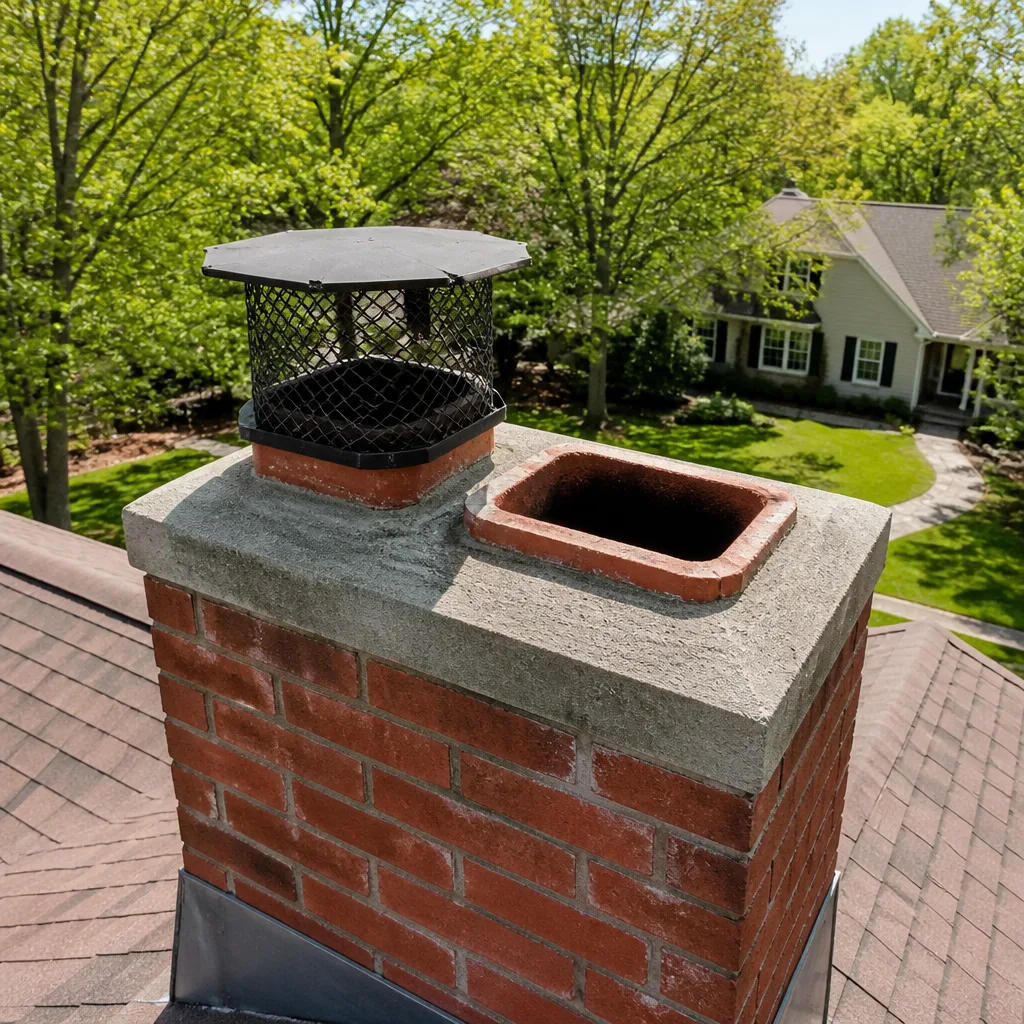
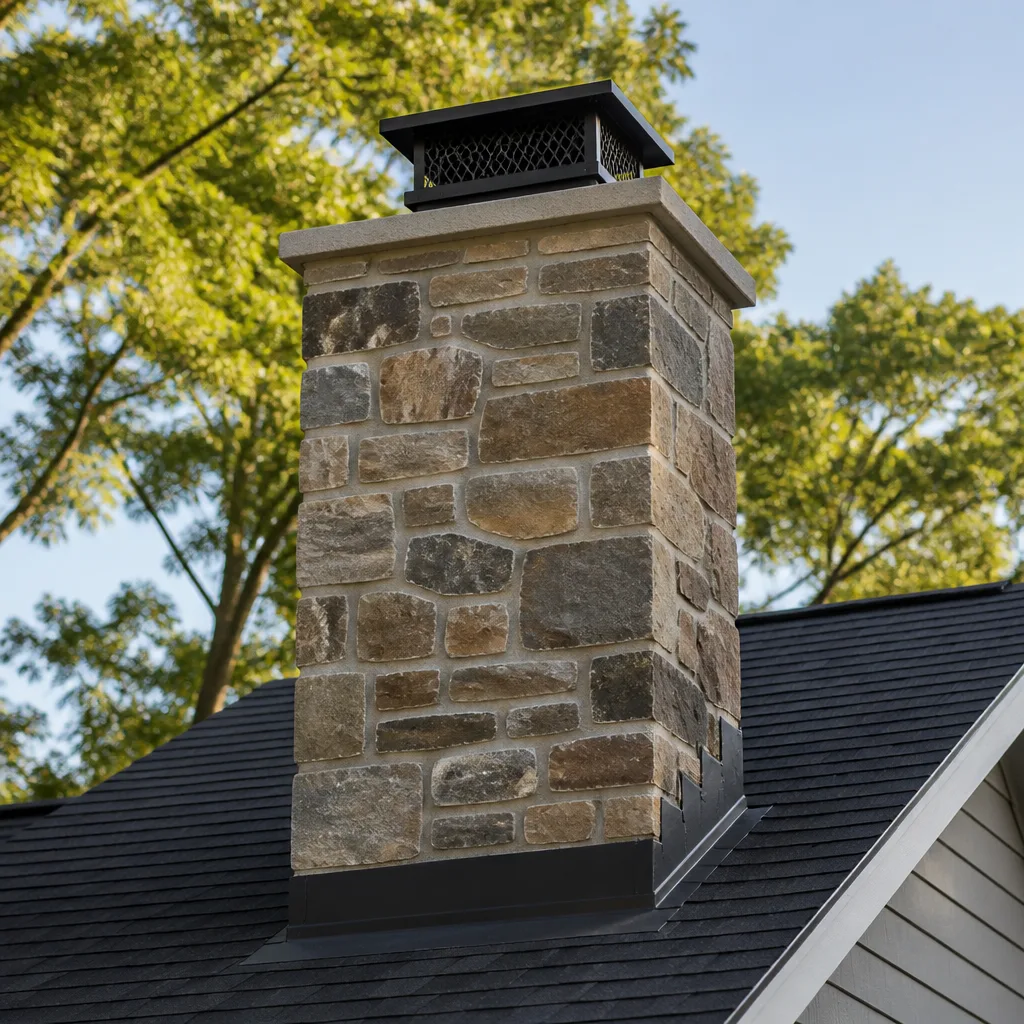
- Crown. The concrete or masonry top that sheds water away from the chimney. A hairline crack in the crown lets water into the masonry beneath it. Water freezes, expands, and widens the crack, and the cycle repeats through every Thornton winter. A brushing-only visit never looks at the crown, so a small crack runs for years before it shows up as a big repair.
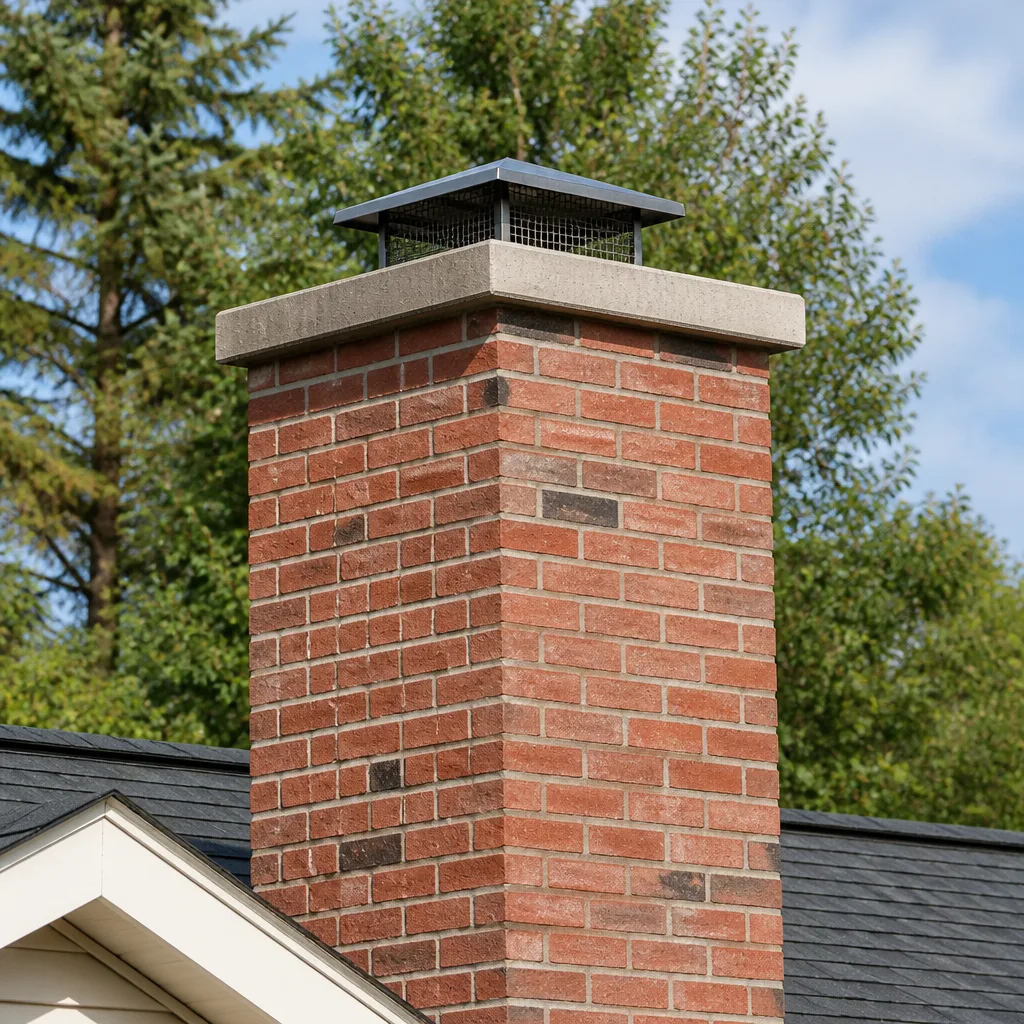
- Cap. The cover over the flue opening. A cap keeps rain, snow, birds, and debris out. A missing or damaged cap means water down the flue and animals nesting inside. Caps don’t last forever, and pre-fabricated caps get dented in hail. A specialist checks the cap is intact, correctly sized, and properly seated.
- Flashing. The metal that seals the seam where the chimney meets the roof. Failed flashing is where most roof leaks around a chimney start. Wind can lift it; age can open the seal. Checking flashing is roof-level work that a sweep who never leaves the firebox won’t do.
- Liner condition. The clay tile or metal liner protects the house from the heat and gases inside the flue. Cracks in clay tile are common in older masonry chimneys and are exactly the kind of thing a video camera finds and a visual check misses. A damaged liner is a real hazard, not a minor defect, because it lets heat reach combustible framing.
- Damper and firebox. The damper needs to open and close cleanly, and the firebox masonry shouldn’t have loose joints or spalling brick. Both affect how the fire burns and are part of every visit.
When a specialist does find a problem, the full-system company can address it rather than handing you a referral. Our work spans Thornton Chimney Sweep Co services from cleaning through repair, including fireplace repair and chimney repair, so a cracked crown or a deteriorated flue doesn’t require a second contractor to figure out.
Why the Wood You Burn Locally Changes Your Cleaning Schedule
The firewood common around Thornton burns differently, and that difference lands in your flue. The two species most homeowners end up with here are pine and beetle-kill spruce, and both are worth understanding if you’re trying to figure out how often your chimney actually needs cleaning.
Pine is a resinous softwood. It burns hot and fast, and it produces more creosote than a dense hardwood when it burns cool. That last part matters. Pine is fine as firewood when it’s dry and the fire is hot, but pine that’s damp or a fire that’s smoldering leaves heavy deposits. Beetle-kill spruce is the other common local fuel. Standing dead spruce burns once it’s seasoned, and it burns well, but it also carries a lot of sap and pitch that ends up in the flue.
The variable that matters most isn’t the species. It’s moisture content. Seasoned wood under roughly 20 percent moisture burns cleanly. Green or wet wood hisses, smolders, and deposits thick creosote because the heat is going into boiling off water instead of burning clean. Any local species stored under a tarp through a wet spell, or stacked against the house where it never dries, can turn into a creosote problem.
So the schedule depends on how you burn, not just what you burn:
- Burn volume. A fireplace used most cold evenings accumulates deposits faster than one used a few times a month.
- Wood moisture. Wet or green wood pushes creosote formation almost regardless of species.
- Fire temperature. Hot, well-drafted fires burn cleaner. Smoldering overnight logs leave the most.
- Nuisance fires. Small fires in fall and spring, burned to take the chill off, can be worse for the flue than a full winter fire because they burn too cool.
A useful rule of thumb: inspect annually and clean when the inspection shows about a quarter-inch of deposit in the flue. If you burn pine or spruce heavily and the fires often run cool, you may need to look more often than once a year.
How to Read a Cleaning Report
A cleaning report tells you whether the technician actually inspected the system or just swept and left. The difference shows up in the details. A report that says only “swept and cleaned” and nothing else is a receipt, not a diagnosis. A real report describes what was found in each part of the chimney and what condition it’s in. Here’s what to look for.
Read the report against this checklist:
- Deposit level. The report should indicate the amount and type of creosote found in the flue, not just that it was cleaned. Glazed or third-degree creosote should be named as such.
- Flue condition. The condition of the liner or clay tile should be described, with any cracks noted. If you asked for a Level 2, the video scan should be referenced.
- Crown. Any cracking, spalling, or missing mortar on the crown should be recorded. “Crown in good condition” is a finding; silence is not.
- Cap. Whether a cap is present, intact, and correctly sized should be stated. If there’s no cap, the report should say so plainly.
- Flashing. The flashing seal where chimney meets roof should be checked and reported. Any lifted or failed sections should be named.
- Firebox and damper. Condition of the firebox masonry and whether the damper operates freely should appear in the findings.
- Photographs. The best reports include photos of the parts that were checked, so you can see what the technician saw. Without a photo or a camera scan, a finding is only a claim.
Those last two points matter for trust. You can’t climb on the roof, so the photos and the camera scan are how you verify the report is real. If a technician found a problem and can’t show you, ask for the evidence. Any recommendation should come with something you can look at and decide on yourself. We inspect before we recommend, and the findings belong to you whether or not you book any repair.
Creosote: The Part Most Homeowners Never See
Creosote is the residue fire leaves behind on the flue walls, and it’s the reason chimney cleaning exists. It forms when wood burns incompletely: the gases cool before they fully burn and condense onto the flue as a tar-like film. It comes in three general grades that any technician should be able to identify:
- First degree: soft and flaky. Soot and light deposit that brushes off cleanly. Most common with good dry wood and hot fires.
- Second degree: hard and crusty. Denser deposit that needs more aggressive brushing. Often a sign of cooler firing or wet wood.
- Third degree: glazed and tar-like. Shiny, hard, and difficult to remove. This is the creosote that burns at very high heat and is the worst to ignore, because a chimney fire fed by glazed creosote can spread beyond the flue.
This is the part where the stakes are real. A chimney that’s “recently cleaned” can still have glazed creosote in a section the brush didn’t reach, or a cracked liner behind it. Cleaning without inspection can miss both. The safety point is simple: creosote buildup and a compromised flue are the two conditions that cause chimney fires, and a sweep that doesn’t look at the system can’t tell you whether either one is present. If you’ve noticed a loud roaring sound from your flue, or a chimney fire has already happened, treat it as a significant event and get a Level 2 inspection before the next fire.
Carbon monoxide is the quiet version of the same problem. A blocked or cracked flue can let combustion gases back into the house without any fire at all, which is why an annual inspection is worth doing even in a year you don’t burn much. This is genuinely dangerous work. A homeowner never needs to be up on the roof or inside the flue, and pushing a brush at glazed creosote without the right tools can damage a liner or spread the problem. We handle high-tension and height-related work like any trained specialist would, so the chimney gets looked at safely by someone who’s dressed for the roof and knows what to look for.
What a Complete Cleaning Visit Involves, Step by Step
A complete visit follows a sequence, and the order matters because the inspection comes before and after the cleaning. Here’s how a full-system service runs from start to finish:
- Walk-through and setup. We look at the firebox and the appliance, talk through what you’ve noticed, and set up drop cloths and a containment system so the work stays off your floors.
- Pre-cleaning inspection. We examine the flue, damper, firebox, cap, crown, flashing, and accessible roof areas before touching anything, so we know the condition we’re starting from.
- Sweep the flue. Depending on the deposit level, we use standard or rotary brushes, and a vacuum running throughout keeps soot from drifting into the room.
- Camera scan if needed. If the visit is a Level 2 or anything looked off in the visual check, a video camera goes up the flue to see the liner from the inside.
- Exterior check. We’re on the roof looking at the cap, crown, and flashing, confirming they’re intact after whatever weather came through.
- Post-cleaning inspection. After the clean, we re-check the flue and components and confirm the deposits are gone and nothing was damaged in the process.
- Report and recommendations. You get a written summary of what was found, with photos, and a recommendation only if the evidence supports one. If a repair can safely wait, we say so.
That sequence is the difference between a cleaning and a diagnosis with a cleaning attached. The two interior inspections and the exterior check are built in, not add-ons. For a straight cleaning with no surprises, a chimney sweep tied to a full inspection is what you want, not a brush-and-go visit.
What Chimney Cleaning Costs and What Changes the Price
Chimney cleaning in Thornton is priced per job by a written estimate, and the estimate is free. The price depends on what the visit actually needs to cover. A straightforward cleaning with a visual inspection sits in one range; a Level 2 with a video scan or a visit that turns up a repair need sits in another. We set the price by written estimate after we understand your chimney, not before.
The variables that move the estimate:
- Access and height. A taller chimney, a steep roof, or a hard-to-reach cleanout affects the labor and time on the visit.
- Deposit level. Light soot brushes out quickly. Glazed third-degree creosote needs rotary tools or chemical treatment and more time.
- Inspection level. A Level 2 with a video camera scan is more involved than a standard visual inspection. It’s the right call after a chimney fire, a home sale, a fuel change, or a hail and wind event.
- System condition. If the visit finds a damaged cap, a cracked crown, or failed flashing, you’ll get a separate estimate for that work, and you decide whether to do it.
- Liner type. A masonry flue with clay tile and a modern metal liner aren’t cleaned the same way, and the tools and time differ.
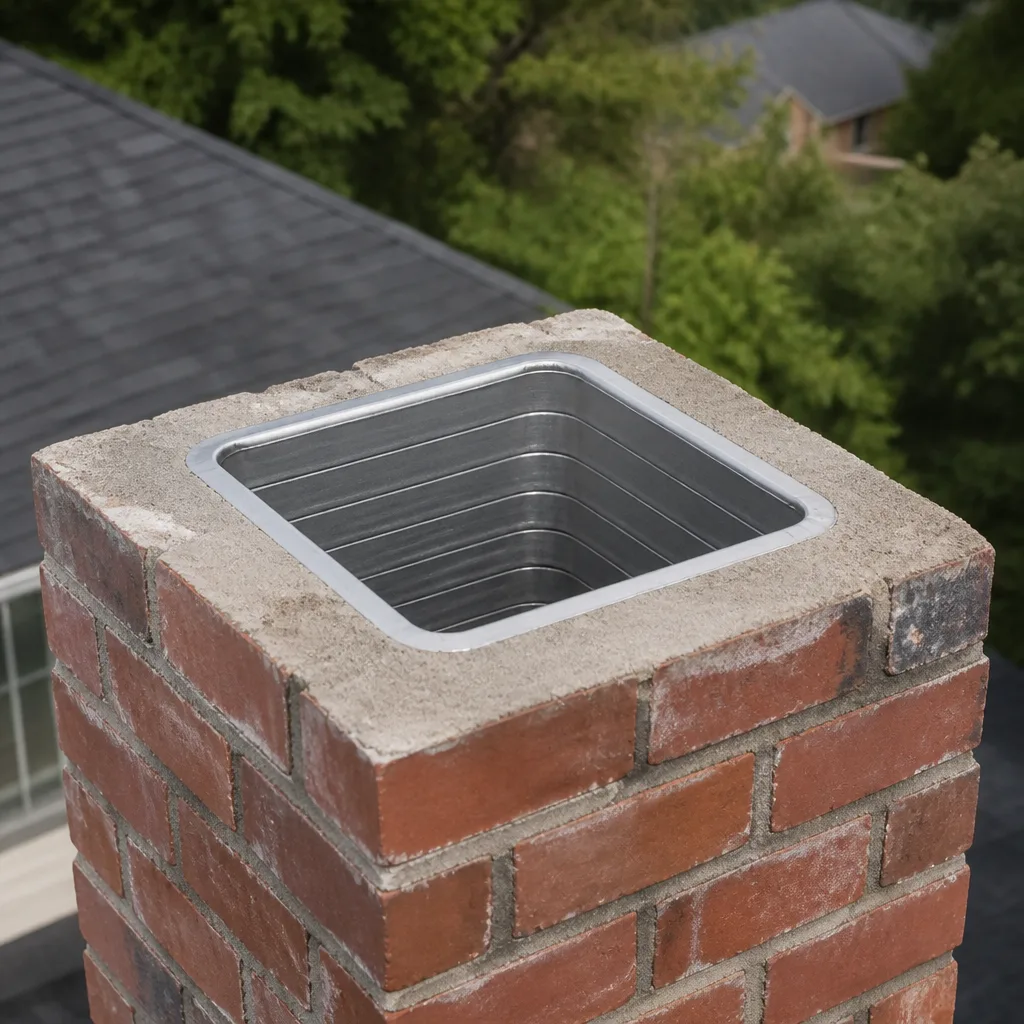
For context on the range, we use professional-grade parts and materials, not hardware-store substitutes, because the parts that fail first are the ones that protect the masonry. If a flue with deteriorated clay tile can be resurfaced rather than fully relined, we’ll tell you, and we work with the HeatShield system for exactly that. Repair options are only offered when the camera footage supports them. You see the evidence before you decide anything.
Common Mistakes to Avoid
- Treating a cleaning as a commodity task. Shopping on price alone gets you a sweep without an inspection, and the inspection is where the real information lives. A brush and a look aren’t the same purchase.
- Skipping the post-hail check. A strong Front Range hailstorm can crack a crown or dent a cap, and the damage won’t show up inside the house. After a significant storm, ask for a Level 2 with a look at the exterior.
- Not documenting a pre-sale inspection. Buyers and their agents want a written report and video. A verbal “looked fine” from a sweep won’t satisfy a serious buyer.
- Burning wet or unseasoned local wood. A stack of damp pine or spruce burns cool and deposits heavy creosote. Season it before you burn it, and keep it dry.
- Assuming a “recent cleaning” means safe. A cleaning that skipped the crown, cap, flashing, and liner can leave real problems in place. What a sweep looked at matters as much as whether it was done.
- Putting off a repair that came up in the report. A hairline crown crack runs through freeze-thaw cycles all winter. Fixing it early is cheaper than fixing the masonry it lets water into.
- Doing the dangerous parts yourself. Roof work, high-tension parts, and glazed creosote removal aren’t homeowner tasks. Get a trained technician on it.
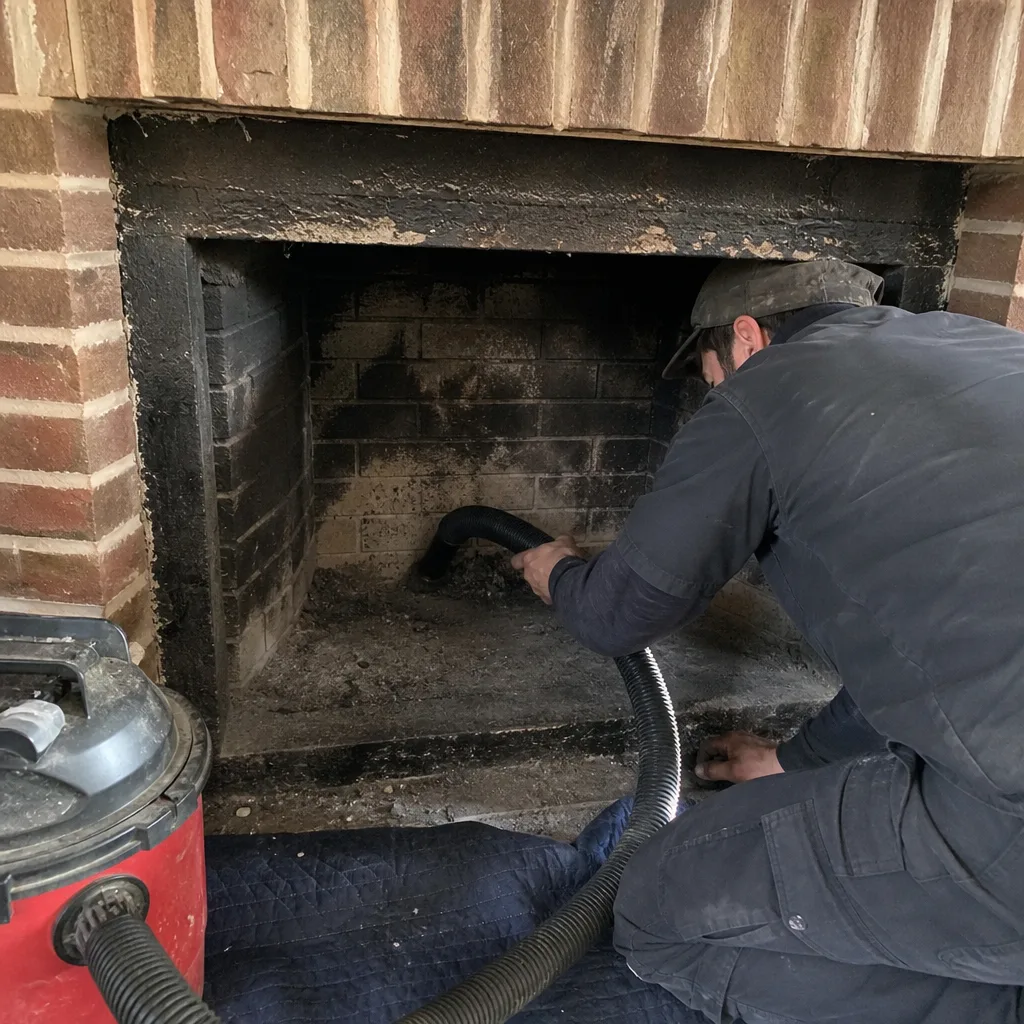
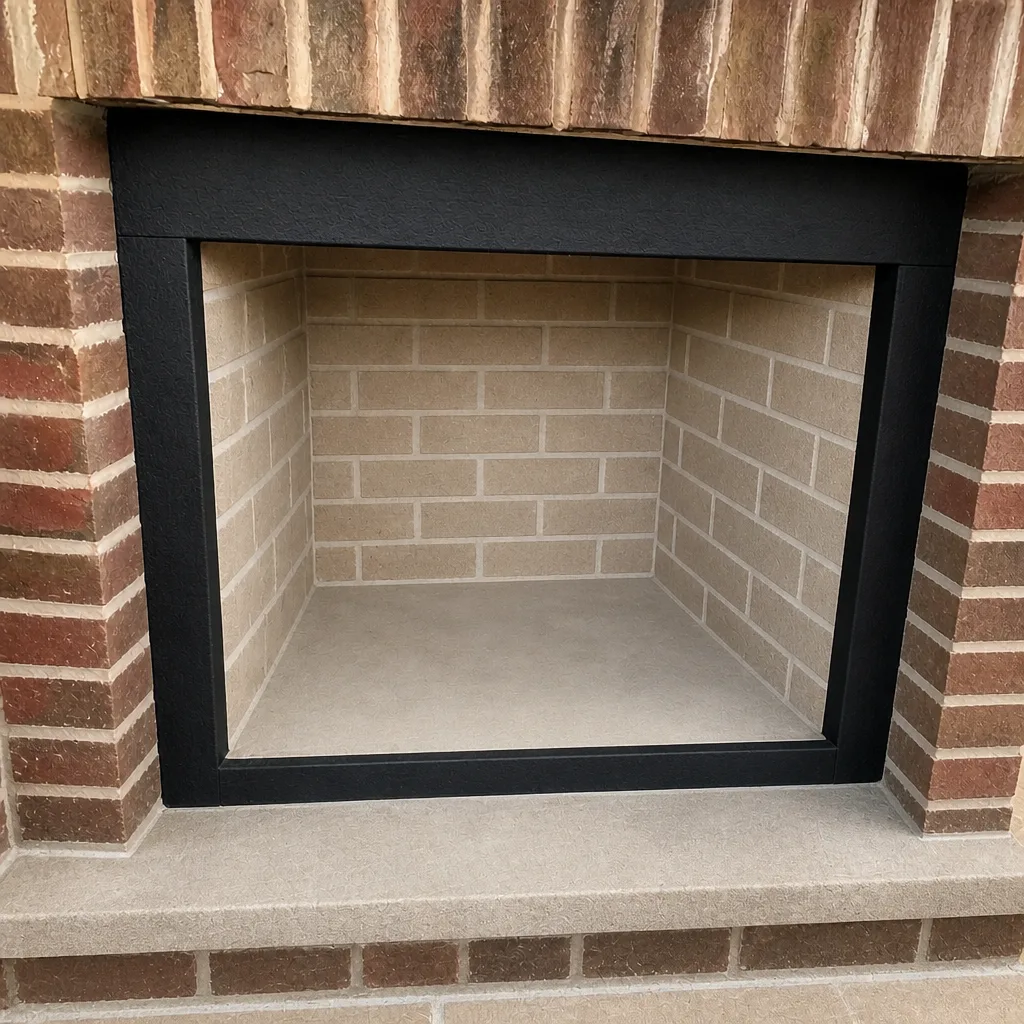
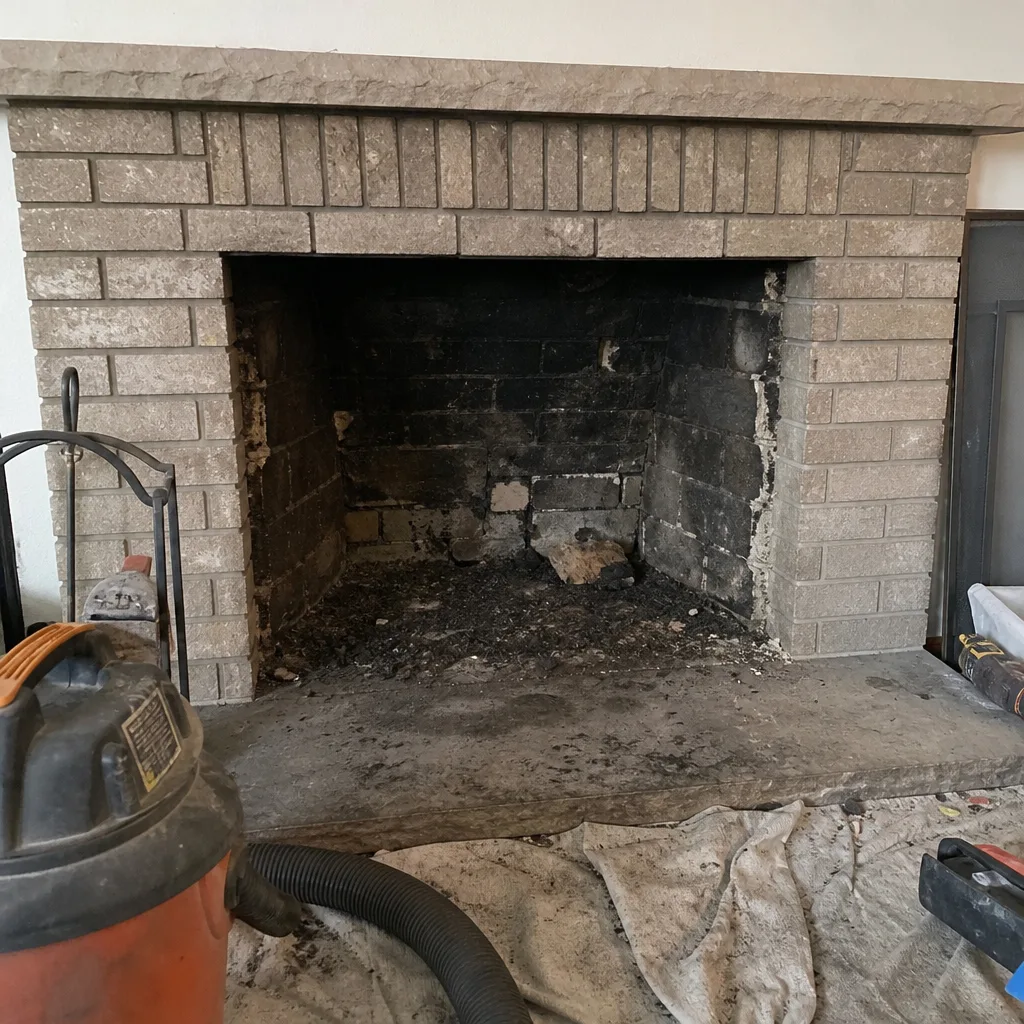
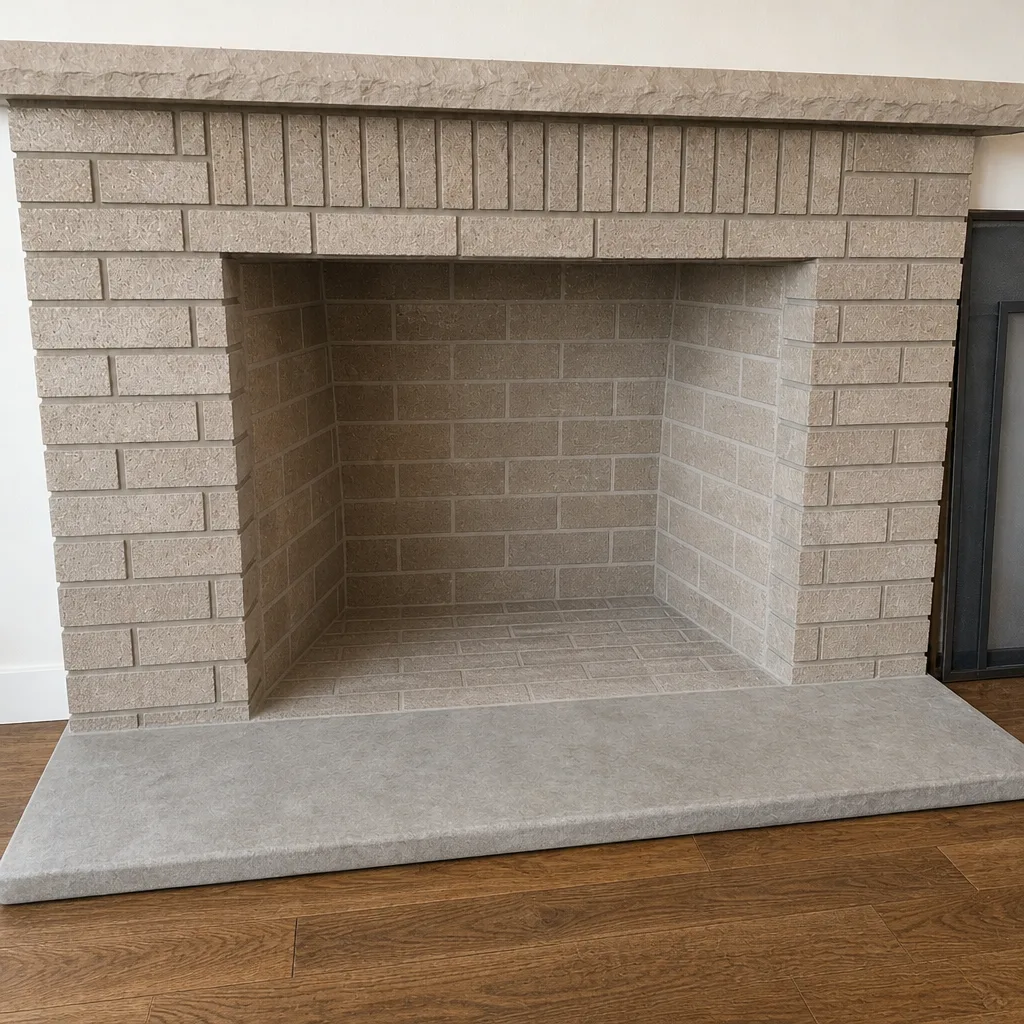
See the difference
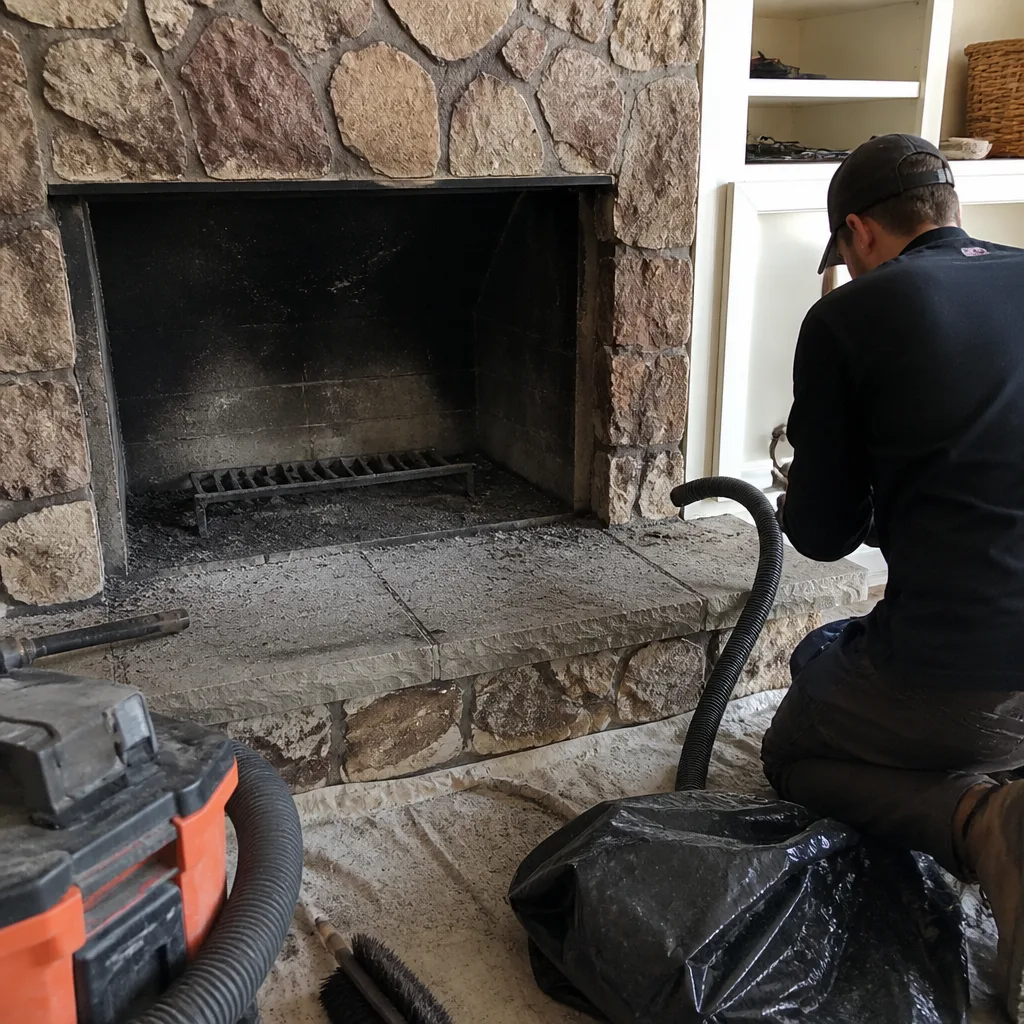 Before
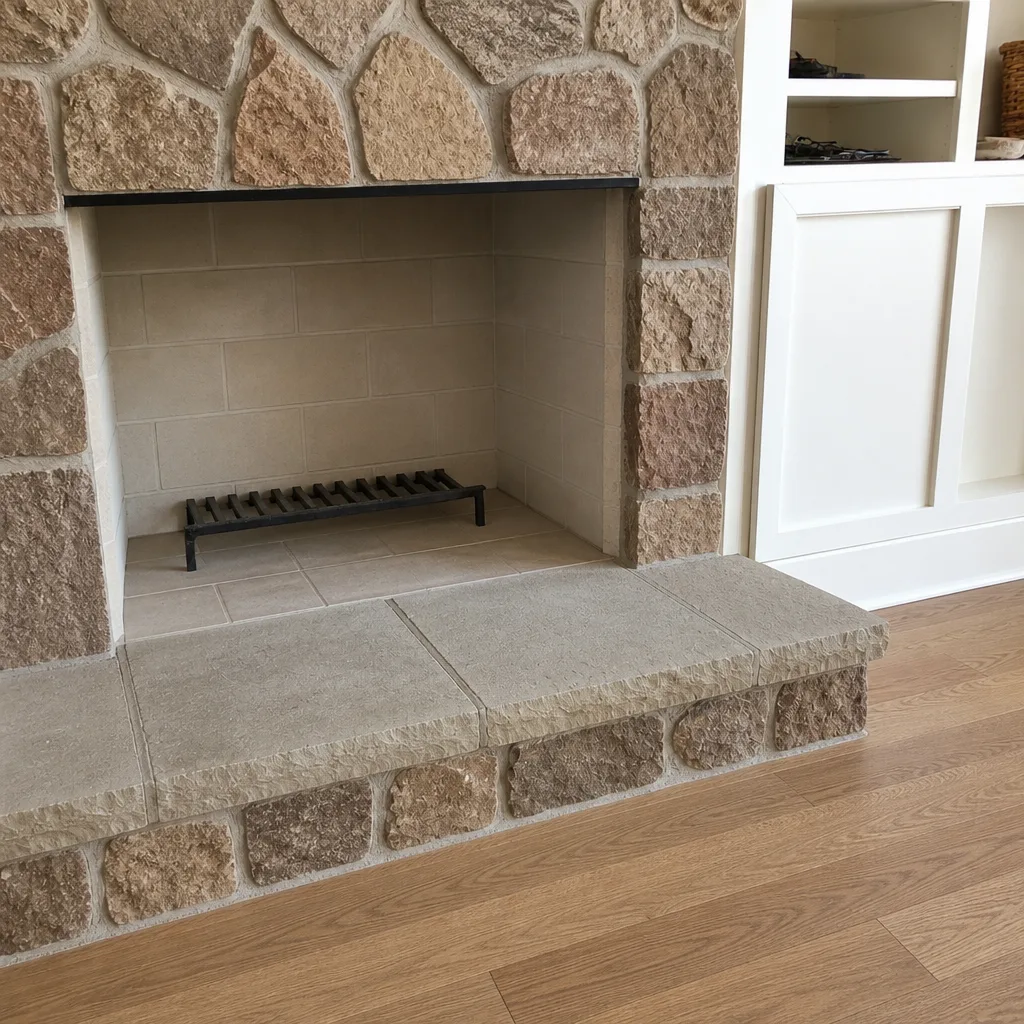 After
 Before
 After
 Before
 After
When to Call a Professional
Some situations need a call, not a YouTube video. Call a chimney professional when:
- You’ve had a chimney fire, even a small one, or heard a roaring sound from the flue.
- You’ve weathered a significant hail or wind event and the chimney is on the roof.
- You’re buying or selling a home and need a documented inspection.
- You’ve changed fuel or installed a new wood stove or insert.
- You smell smoke in the house, notice soot stains, or the fire back-drafts.
- You haven’t had the chimney inspected in a year, or don’t know when it was last looked at.
The estimate is free, and we inspect before we recommend. No pressure and no upselling, just what we found and what we’d do about it. Call Thornton Chimney Sweep Co at (844) 443-4565 for a free estimate in Thornton.
Frequently Asked Questions
Most Thornton chimneys should be inspected once a year and cleaned when the inspection shows about a quarter-inch of deposit. If you burn pine or beetle-kill spruce heavily and the fires often run cool, you may need a cleaning more often than once a year. The inspection, not the calendar, tells you when it’s due.
Yes, after a significant hail or wind event in Thornton, a Level 2 with a video scan is the right call. Hail can crack a crown and wind can loosen a cap or flashing, and none of that damage is visible from inside the house. The camera and the exterior check catch what a visual sweep can’t.
A complete visit includes a pre-cleaning inspection of the flue, firebox, damper, crown, cap, flashing, and liner condition, a sweep with containment, a post-cleaning re-check, and a written report with photos. The inspection is the diagnosis and the sweep is the cleaning attached to it. For a full report, a chimney inspection visit is designed around exactly that.
Sometimes, but not always. A heavy creosote blockage can restrict the draft, and cleaning it out restores airflow. But back-drafting in Thornton often comes from wind off the foothills or a venting problem that cleaning doesn’t touch. The inspection is what tells you which one you have.
Yes. A cleaning that skipped the crown, cap, flashing, and liner can leave a cracked crown, failed flashing, or glazed creosote in a section the brush didn’t reach. That’s why the inspection matters as much as the cleaning. If the last visit produced no report and no photos, it’s worth having the system looked at properly.
We handle masonry and metal-lined chimneys, wood-burning and gas fireplaces, and the full range of repair from cap and crown installation to liner work. We install and service professional-grade products including DuraFlex, HeatShield, and Olympia Chimney. Call (844) 443-4565 and we’ll tell you what your chimney needs. We answer 24/7. Fast dispatch from 7am to 7pm, Sunday through Friday.
The Bottom Line
Chimney cleaning in Thornton is a diagnosis with a cleaning attached, and the homeowners who treat it as a commodity task are the ones who end up with problems a proper inspection would have caught. Inspect annually, and clean when the report shows it’s due. After a hail or wind event, or a home sale, or a change in fuel, ask for a Level 2 with a video scan. Burn dry local wood, keep an eye on the deposit level, and read the report to see whether anyone actually looked at the crown, cap, flashing, and liner. A written report with photos is what turns a sweep into real information you can act on.
Calm, professional, and thorough is the standard we hold ourselves to. One call covers cleaning, inspection, and any repair that follows. Call Thornton Chimney Sweep Co at (844) 443-4565 for a free estimate. We answer 24/7. Fast dispatch from 7am to 7pm, Sunday through Friday.
Written by the team at Thornton Chimney Sweep Co.