
Last updated November 23, 2026
 Sweep & inspection
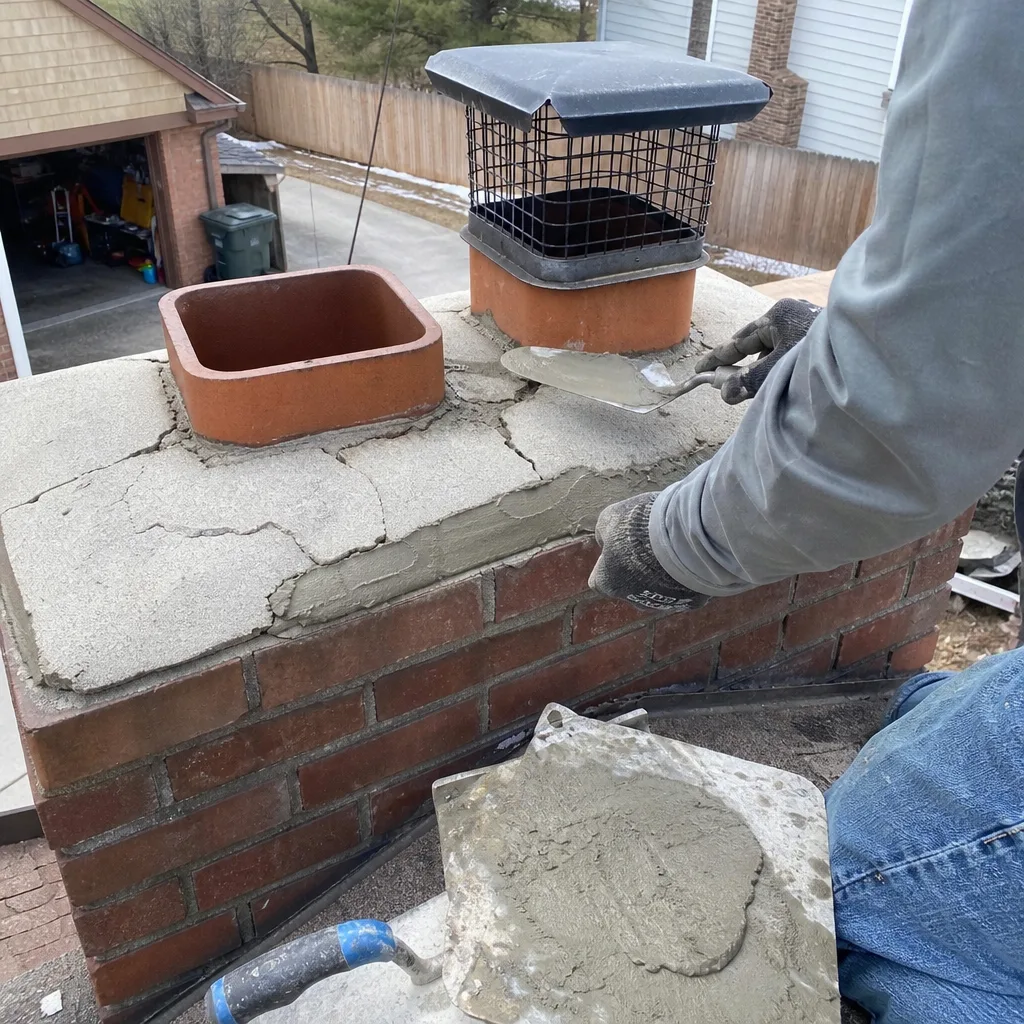
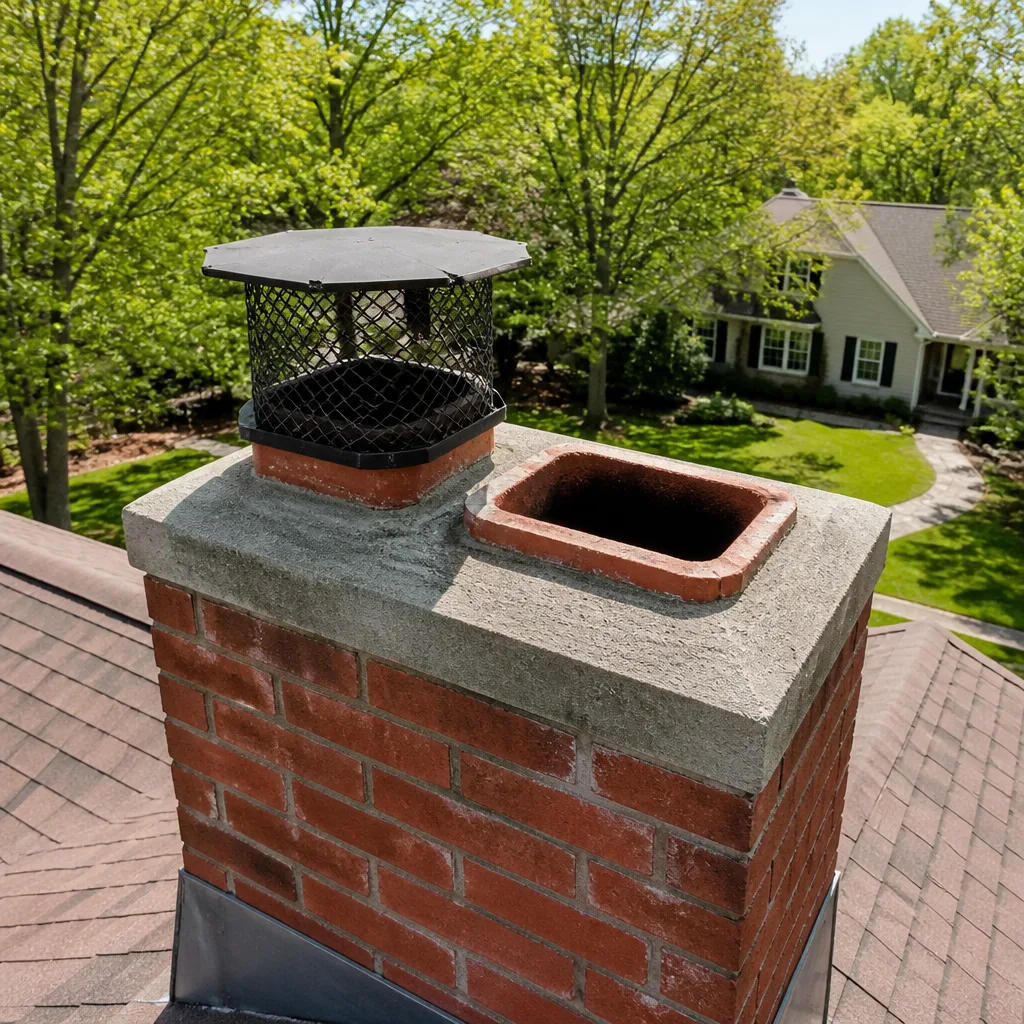
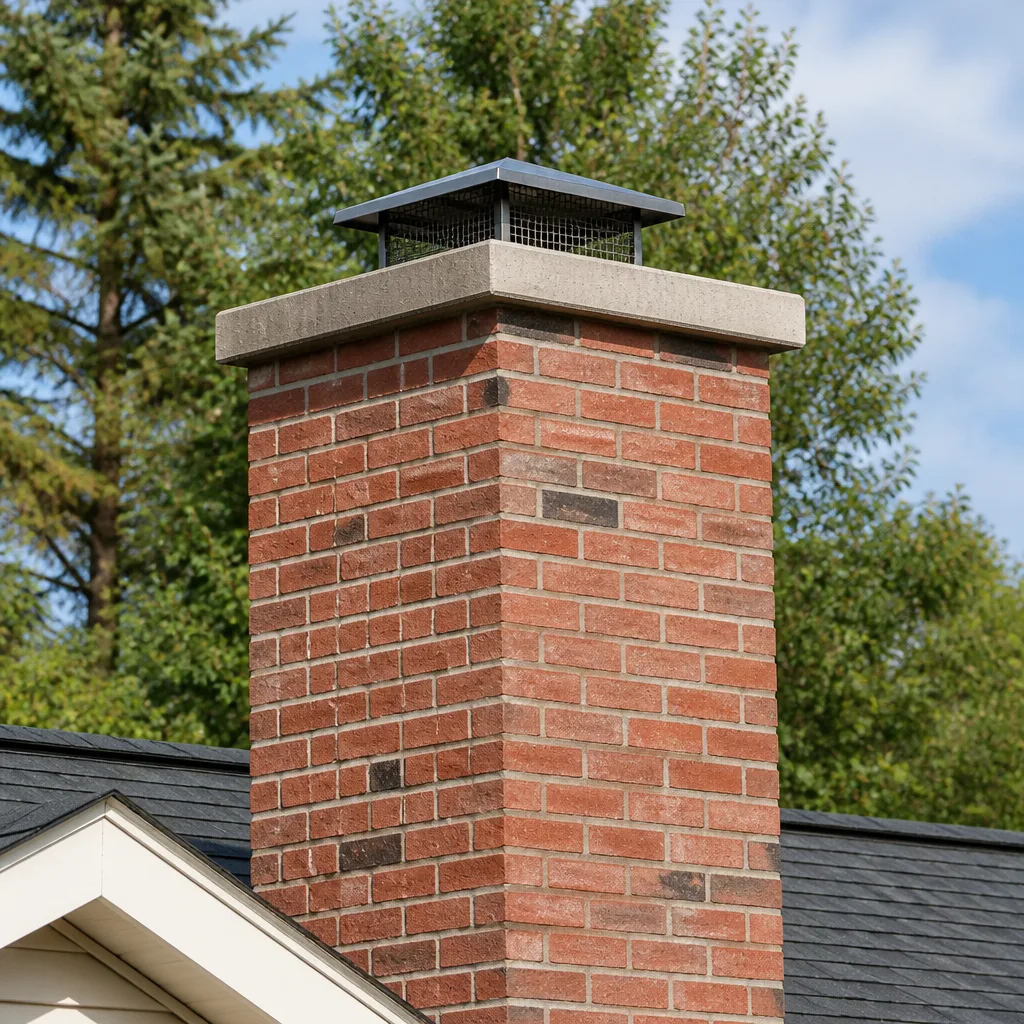 Caps & crowns
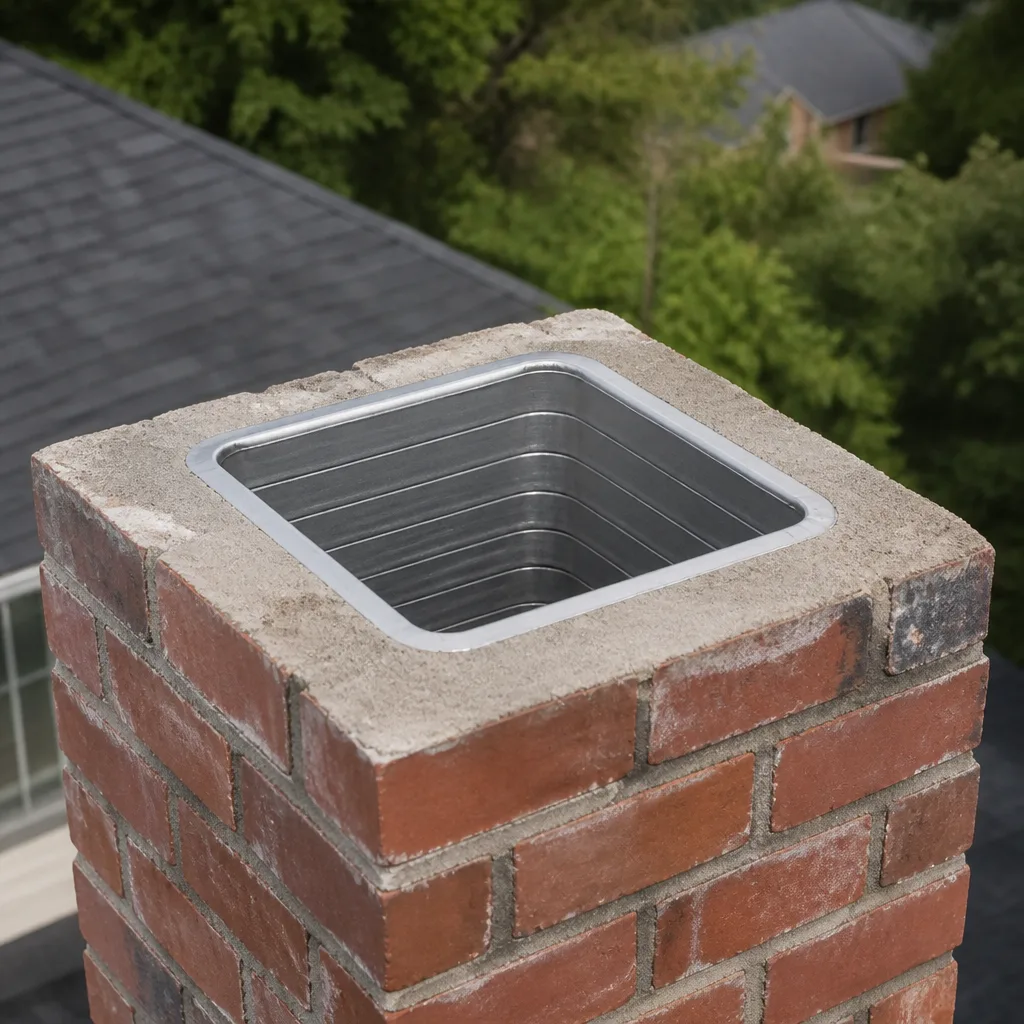 Flue relining
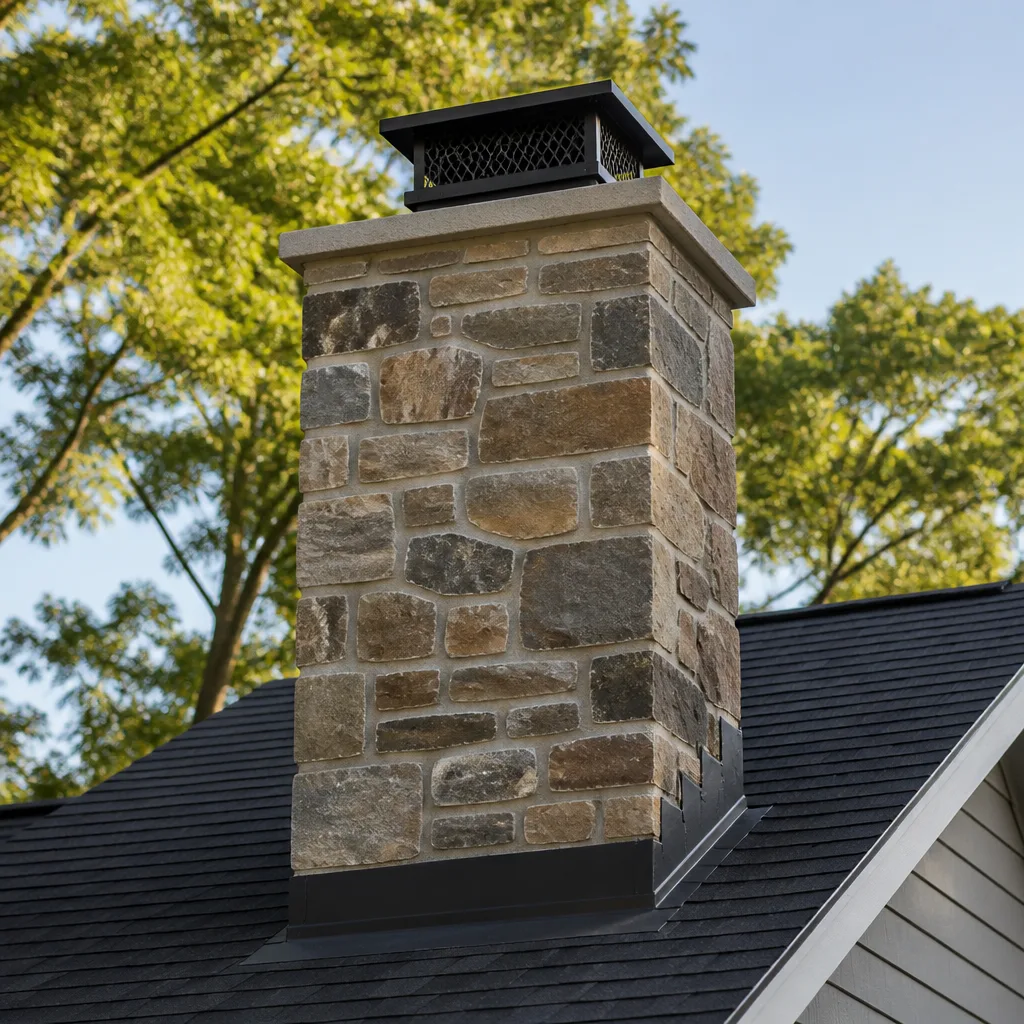 Masonry repair
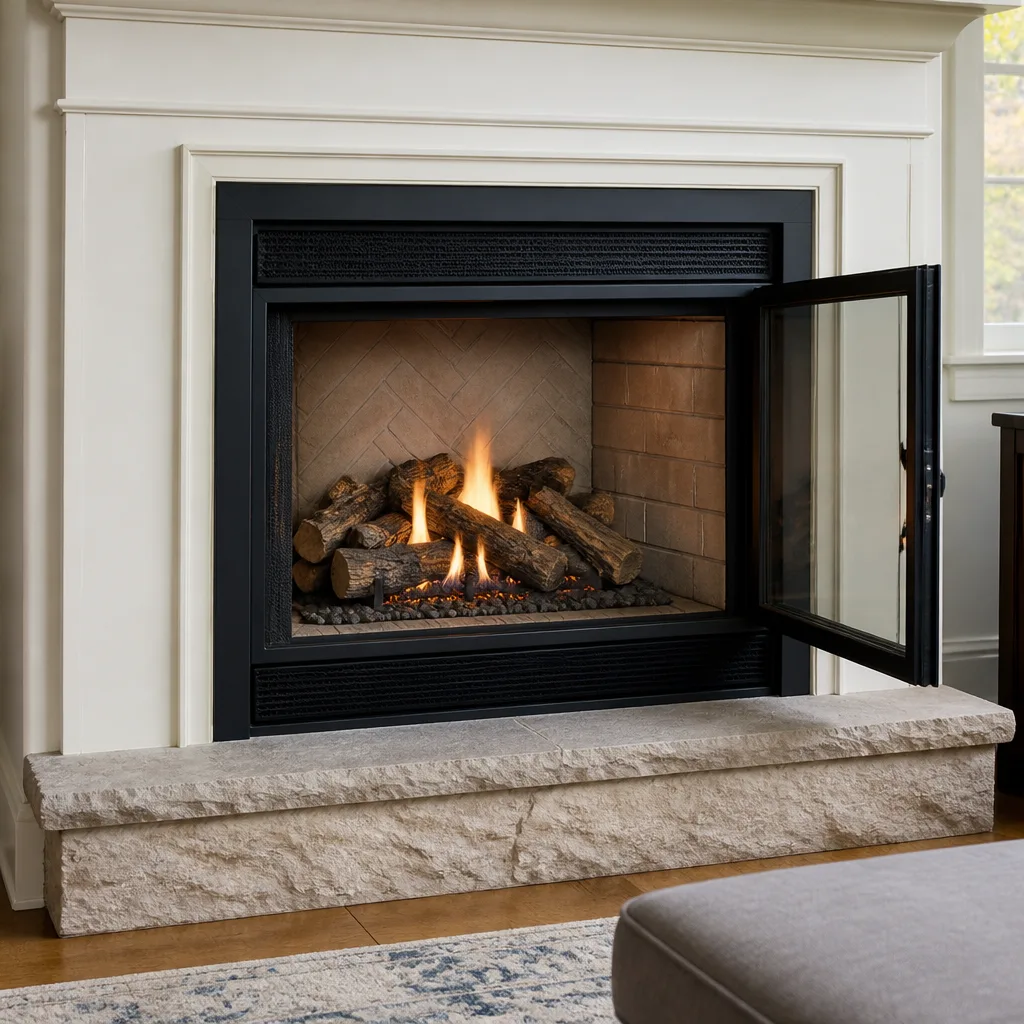 Gas fireplace service
Level 1 sweep and inspection to the NFPA 211 annual standard - flue, crown, cap, and flashing checked and photographed
Chimney sweep logs do not sweep chimneys. They loosen some creosote - which then falls where a brush and vacuum still have to collect it.
Seasonal Chimney Cleaning Care for Thornton: Year-Round Homeowner’s Guide
Most homeowners in Thornton book their chimney sweep in October, right before the first fire of the season. That timing feels responsible, but it means the system sits unchecked through spring hail, summer heat, and the wettest weeks of the year, then gets cleaned just in time to start loading it with creosote again. By the time anyone looks at the flue, damage that started in May has had five months to spread. This guide lays out a different calendar for Thornton homeowners, one built around the two threat windows and two preparation windows that actually govern a chimney here, so you know what to do each season and, just as importantly, what can safely wait.
Quick Answer
A chimney in Thornton needs cleaning based on burn hours, not a fixed annual date, and the ideal prep sweep lands in late August rather than October. Book a post-winter inspection in April or May to catch freeze-thaw and hail damage, a post-storm inspection after any major spring hail event, and a summer check for moisture and animal intrusion. Heavy fireplace users (three or more cords a year) usually need a sweep every fall plus a mid-season look; light users can stretch to every other year with an annual inspection.
Styles & brands we work with
- Sweep & inspection
- Caps & crowns
- Flue relining
- Masonry repair
- Gas fireplace service
Table of Contents
- Why Thornton’s Chimney Year Has Two Threat Windows and Two Prep Windows
- Why a Late-August Sweep Beats October in Thornton
- What Thornton’s Spring Hail Season Does to Caps, Chase Covers, and Flashing
- The Summer Problem: Why an Unused Chimney Still Deteriorates
- How to Set Your Cleaning Frequency by Burn Hours, Not the Calendar
- The Cascade Effect: How Skipping Post-Winter Inspections Costs More Later
- What “Full System” Care Means for a Thornton Chimney
- Inspection vs. Sweep: What Each One Catches
Why Thornton’s Chimney Year Has Two Threat Windows and Two Prep Windows
Chimney care advice usually gets parceled out as four equal seasons, each with a tidy task. That structure doesn’t match how a chimney in Thornton actually fails. The real pattern is two threat windows and two preparation windows, and understanding which is which tells you where to spend money and where to hold back.
The two threat windows are spring freeze-thaw and winter high use. In spring, water gets into masonry, then refreezes overnight as temperatures swing, and the expansion cracks mortar, spalls brick faces, and opens gaps around the crown. In winter, you load the flue with creosote and heat while the outside stays cold, which stresses the liner and the joints. The two preparation windows sit just before each threat: late summer, before heavy burning starts, and early spring, before the thaw does its work.
Here’s the practical difference between the windows:
- Threat windows are when damage happens. You can’t prevent weather, and you can’t stop burning in January. What you can do is enter each window with the system sound.
- Preparation windows are when a sweep, an inspection, and any repair actually pay off, because you’re fixing something before it gets loaded with soot, water, or heat.
Most Thornton homeowners only ever act inside a threat window. They call in October because the cold is coming, or they call in January because something smells wrong. Both are reactive. The homeowner who calls in late August and again in April is running the calendar in the right order, and in our experience that homeowner spends less over five years because problems get caught at the crack stage rather than the rebuild stage.
This is the structure that should drive your whole year. Everything below is just the detail of what happens in each window.
Why a Late-August Sweep Beats October in Thornton
If you use your fireplace heavily from November through February, a late-August sweep is strategically better than an October one, and the reason is simple arithmetic. By October, you’ve already had a full burning season’s worth of creosote sitting in the flue since spring, and you’re about to add the heaviest weeks of the year on top of it. A sweep in August clears the accumulated residue right before the load starts building again, so the flue enters its heaviest-use stretch as clean as it can be.
October has a second problem: it’s the busiest month of the year for anyone who does this work. Every homeowner in Thornton wakes up to the same thought at the same time, and scheduling gets tight. Late August sits in a quiet stretch, which means more choice of appointment and no scramble before the first cold snap.
What a late-summer appointment covers:
- Removal of soot and creosote from the flue, firebox, and smoke chamber.
- A visual check of the liner, damper, and firebox for cracks or gaps.
- A look at the cap, crown, and flashing while the weather is still dry and easy to work in.
- Confirmation that the flue is clear of bird nests, leaves, or debris that built up over summer.
Burn-season timing in Thornton is fairly predictable. The first serious cold usually arrives in late October or early November, and heavy use runs through February. If your sweep lands in the last two weeks of August, the flue is clean exactly when the creosote load starts climbing. If it lands in mid-October, you’ve lost the two cleanest weeks of the shoulder season and you’re sweeping into a deadline. For a heavy user, the difference across a season is real.
There’s also a comfort argument. A clean flue starting in November means less chance of a mid-winter smell, a restricted draft, or a chimney fire risk that builds quietly through the coldest month. If you’d rather not think about the chimney again until spring, August is the appointment that buys you that quiet.
What Thornton’s Spring Hail Season Does to Caps, Chase Covers, and Flashing
Spring in Thornton brings hail, and hail is hard on the top of a chimney. The cap, chase cover, and flashing are the parts that take the hit, and damage there doesn’t announce itself from inside the house. Water that gets in through a cracked chase cover or a lifted flashing seam travels down the masonry or the chase and shows up months later as a stain on the ceiling or a crumbling mortar joint. Post-storm inspection is the protocol that catches it while the repair is still small.
Where hail hits hardest:
- Chimney caps. Metal caps and their screens dent, tear, or detach. A cap knocked loose lets rain straight into the flue and lets animals in. A cap is the first line of defense, and a hail-damaged one stops doing its job quietly.
- Chase covers. On a framed chase, the flat metal lid over the whole chimney takes the full force of a storm. Dents are cosmetic; split seams and rusted-through spots are not. Once water gets under a chase cover, the framing inside the chase is at risk, and that’s a much bigger repair than a new cover.
- Flashing. The metal where the chimney meets the roof is the most common leak point on any roof. Hail can bend the flashing or break the sealant line, and the leak shows up at the next steady rain, not the day of the storm.
Our post-storm inspection protocol is straightforward. After any significant hail event in Thornton, we check the cap for dents and attachment, the chase cover for seams and rust, the flashing for lifted edges and failed sealant, and the crown for new cracks. We also look down the flue from the top because hail can knock mortar and debris loose and drop it onto the smoke shelf.
The reason this matters in this climate is the sequence. Hail cracks the crown or lifts the flashing in May, then spring rain gets in, then a freeze at night expands the water in the crack, and by fall the crack has become a broken crown or a saturated chase. The post-storm inspection breaks that chain before the freeze gets its turn. It’s one of the highest-value appointments a Thornton homeowner can make, and almost nobody schedules it.
The Summer Problem: Why an Unused Chimney Still Deteriorates
A chimney you haven’t lit since March is still working against you all summer. The mistake is thinking that no fire means no activity. The threats in summer are water, animals, and neglect, and they all get worse when nobody is looking up at the chimney for four months.
Moisture is the main one. Summer storms dump rain on the crown and cap, and any crack in the crown lets water into the masonry. Masonry is porous, so it absorbs water and holds it. Then a cool night drops the temperature and the water in the brick and mortar expands as it freezes, or simply migrates inward and shows up as efflorescence, the white staining on brick, or as a damp smell in the firebox. The crown is the part most exposed to this, and a cracked crown is one of the most common things we find on a summer inspection in Thornton. A sound crown, properly sloped, sheds water. A cracked one funnels it into the structure.
Animals are the second summer problem. An open or damaged flue is a chimney swift’s dream, and so is a raccoon’s. Birds build nests on the smoke shelf, and a nest is both a draft restriction and a fire hazard when you light the first fire of fall. A well-fitted cap with a proper screen is the answer, and it’s part of the cap and crown work we do.
Third is simple deterioration. A chimney nobody inspects for a year is a chimney where a hairline crack in the flue tile becomes a through-crack, and where a small crown chip becomes a chunk missing. Summer is the ideal time to catch these because the weather allows repairs to cure properly and because you’re not depending on the fireplace for heat yet.
A short summer checklist for a Thornton homeowner:
- Look at the crown from the ground with binoculars for new cracks or missing pieces.
- Check that the cap is still attached and the screen is intact.
- Smell the firebox on a humid day; a damp, musty smell suggests water is getting in.
- Listen for birds or scratching in the flue.
- Book an inspection if any of the above seems off.
None of this requires a fire to be present. A chimney is a structure on your roof, and structures weather whether or not you use them.
How to Set Your Cleaning Frequency by Burn Hours, Not the Calendar
A fixed annual sweep is a habit, not a schedule. The right cleaning frequency for your chimney depends on how many hours you actually burn and what you burn, and matching a sweep interval to your real usage saves money for light users and prevents risk for heavy ones.
Creosote accumulates in proportion to burn time and to how cool the fire runs. A hot, well-aired fire produces less creosote. A smoldering, damped-down fire produces more. So a homeowner who burns a cord a year of dry hardwood in a hot fire needs less frequent cleaning than one who burns the same amount of green wood with the damper choked. This is why the calendar alone is a poor guide.
A rough framework we use with Thornton homeowners:
- Heavy use (three or more cords a year, or near-daily burning November through February): sweep in late August, and have a mid-season visual check in January. Annual inspection is a given.
- Moderate use (one to two cords, a fire most nights in the coldest months): sweep every fall. Annual inspection.
- Light or occasional use (a fire a few times a month, or gas only): an annual inspection catches issues; the sweep can often stretch to every other year if the inspection shows low buildup.
- Gas fireplaces: no creosote, but the venting, logs, and pilot assembly still need an annual inspection. Skip the sweep, keep the inspection.
There’s also the question of how to know when it’s time. The old rule of thumb is a quarter inch of soot or creosote on the flue walls, which is roughly when a fire hazard builds. You can’t see that from the firebox without a light and a mirror, so the honest answer is that the inspection tells you. That’s why we inspect before we recommend, because the burn hours and the buildup, not the calendar, should decide.
If you’re not sure where you fall, the number to track is cords per winter. Write it down. It’s the single best predictor of how often your Thornton chimney needs cleaning.
The Cascade Effect: How Skipping Post-Winter Inspections Costs More Later
The most expensive chimney is the one that gets inspected only once a year, in the fall, because every missed spring inspection compounds. We call it the cascade effect, and it’s the reason the two-window calendar matters more than any single appointment.
Here’s how it runs. Winter use leaves creosote and heat stress in the flue. Spring freeze-thaw opens a hairline crack in the crown that a fall inspection would have caught before it grew. Summer rain gets into the crack and saturates the masonry. Fall arrives, and the homeowner books the pre-winter sweep. The inspection now finds a cracked crown, water-damaged masonry, and possibly a compromised flue joint that started as a hairline. What would have been a crown repair in May is now crown work plus masonry repair plus a conversation about the liner.
Each stage makes the next more expensive:
- Missed spring inspection: a small crack goes unnoticed.
- Spring rain plus freeze: the crack widens and the surrounding masonry absorbs water.
- Summer: the moisture drives deterioration and efflorescence; animals move in through the failing cap.
- Fall inspection: the problem is now visible and larger, and the repair scope has grown.
The alternative is the two-window calendar. A spring inspection catches the crack in May, when the repair is a crown patch or a flashing reseal. A late-August sweep enters the burn season with a clean, sound flue. The homeowner who runs this pattern effectively never pays for a late-stage repair, because the earlier repair happened when it was cheap.
The math is straightforward even without a dollar figure attached: small repairs happen at small scale, and skipped inspections let problems cross the line into the expensive category before anyone sees them. In our experience, most of the major chimney work we’re called to in Thornton traces back to a problem that was small a year earlier.
What “Full System” Care Means for a Thornton Chimney
A chimney is five systems in one: the firebox and damper, the smoke chamber, the flue and liner, the crown, and the cap. A sweep that only brushes the flue treats one of the five, and leaves the other four to be discovered later, usually by a different contractor. Full-system care means one company looks at the whole chimney, top to bottom, and handles whatever it finds without sending you to someone else.
That matters most when a repair surfaces. If the inspection finds a damaged flue tile, the options range from resurfacing to a full liner, and the right choice depends on how far the damage has spread. We use the HeatShield system for resurfacing, which lets us address a deteriorated flue tile without always going to a full liner replacement, an option a sweep-only operation can’t offer. When a liner is the right call, we install professional-grade DuraFlex and Olympia Chimney liners, and we fit caps and crowns from Gelco, Famco, and Copperfield, the same tier of materials a certified chimney institute works with rather than hardware-store substitutes.
What full-system care covers, in order:
- The chimney sweep clears soot and creosote from the flue and firebox.
- The chimney inspection checks all five parts and produces findings you can see, not a sales pitch.
- fireplace repair handles the firebox, damper, and firebox cracks.
- chimney repair handles masonry, crown, flashing, and liner work.
- Cap and crown installation closes the moisture path at the top.
The company structure matters too. A business with “Co” in its name is a formal operation with a crew and accountability, not a solo operator who may or may not return your call next season. For a homeowner planning a decade of chimney care, that continuity is worth something. Thornton Chimney Sweep Co handles the whole chimney, from the firebox floor to the crown cap, and that means one call covers cleaning, inspection, and any repair that follows.
Inspection vs. Sweep: What Each One Catches
Homeowners often use “sweep” and “inspection” interchangeably. They’re different services, and the seasonal calendar depends on knowing which one you’re booking. A sweep removes soot and creosote; an inspection evaluates the condition of the system. You need both, and they don’t always happen on the same visit.
A sweep is a cleaning. It removes the creosote, soot, and debris from the flue and firebox so the chimney vents safely and the next fire doesn’t burn on top of last season’s residue. It’s the service that lowers fire risk and restores draft. It does not, on its own, tell you the condition of the liner, the crown, or the flashing.
An inspection is a condition assessment. It checks the flue and liner for cracks, the smoke chamber and damper, the firebox, the crown, the cap, and the flashing. It’s where you find the hairline crown crack or the flue joint that’s starting to fail. In our experience, this is the appointment that prevents the expensive surprise, because it finds the problem while it’s still a finding rather than a failure.
How the two fit a Thornton year:
- Late August: sweep, plus an inspection before the burn season starts.
- April or May: inspection after the burn season, to catch freeze-thaw damage.
- After major hail: inspection, with focus on cap, chase cover, and flashing.
- Mid-summer: a light check for moisture and animals if you’ve seen anything odd.
Not every visit is a full inspection. A sweep visit includes a visual check, and a full inspection goes further. When you call, the question to ask is which one you’re booking. For a homeowner who burns regularly, the annual inspection is the non-negotiable part, and the sweep frequency follows the burn hours.
Common Mistakes to Avoid
- Booking the sweep in October. It’s the busiest month, and it means the flue sat dirty through spring and summer. Late August gives you a clean flue exactly when heavy use begins.
- Skipping the spring inspection. Spring freeze-thaw and hail do their damage in April and May. A fall-only routine never sees it until it’s a much larger repair. Add a post-winter inspection.
- Ignoring the chimney after a hail storm. Hail dents caps and chases and lifts flashing, and the leak shows up weeks later. Walk the roof line or call for a post-storm look if the storm was significant.
- Assuming an unused chimney is safe. Summer water intrusion, cracked crowns, and animal nests all happen with no fire in the box. The structure weathers regardless of use.
- Setting the schedule by the calendar instead of burn hours. A light user may not need an annual sweep; a heavy user may need a mid-season check. Track your cords and let the inspection decide.
- Letting a small crown crack go. A crown crack in May is a patch; the same crack in November is often a rebuilt crown. The cascade is real and the fix gets bigger each month.
- Hiring a sweep-only operation and stopping there. The flue is one of five systems. A sweep alone doesn’t tell you about the crown, cap, flashing, or firebox, which is where the expensive problems live.
See the difference
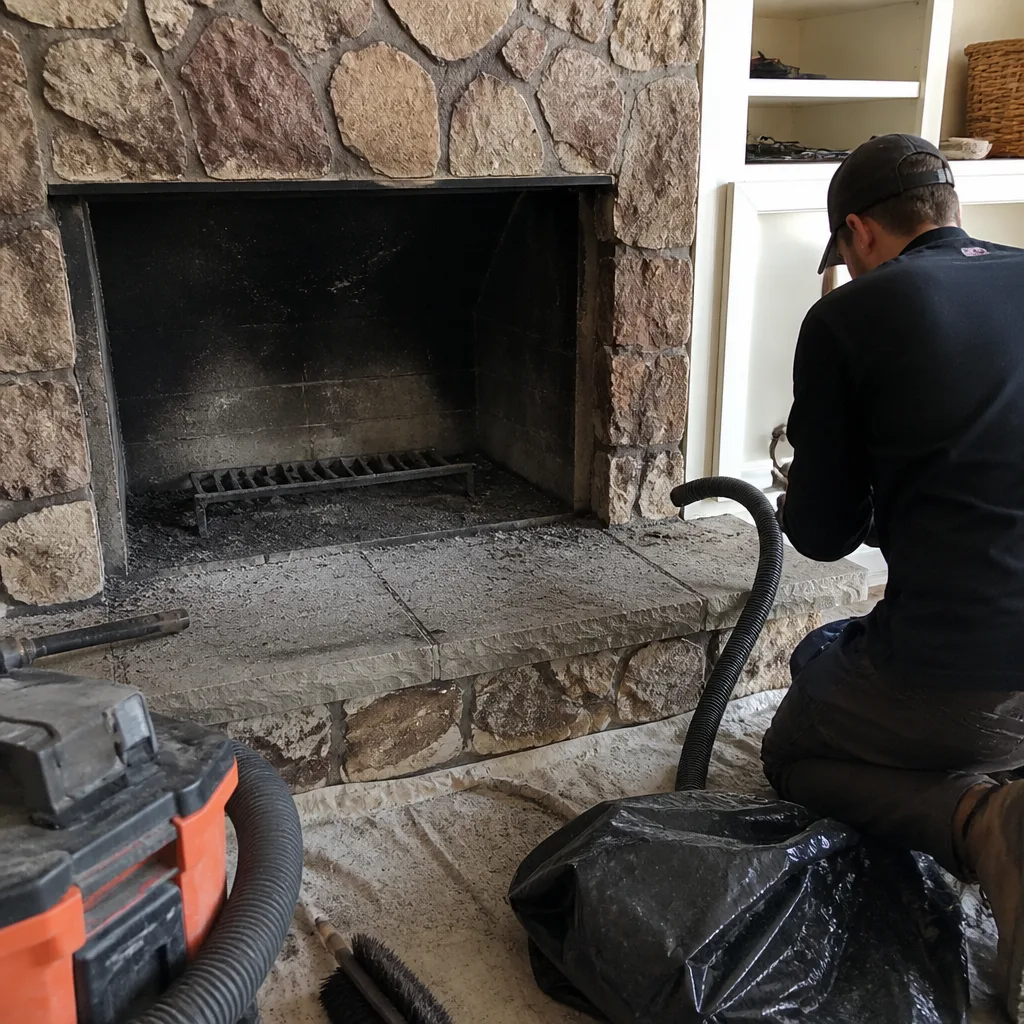 Before
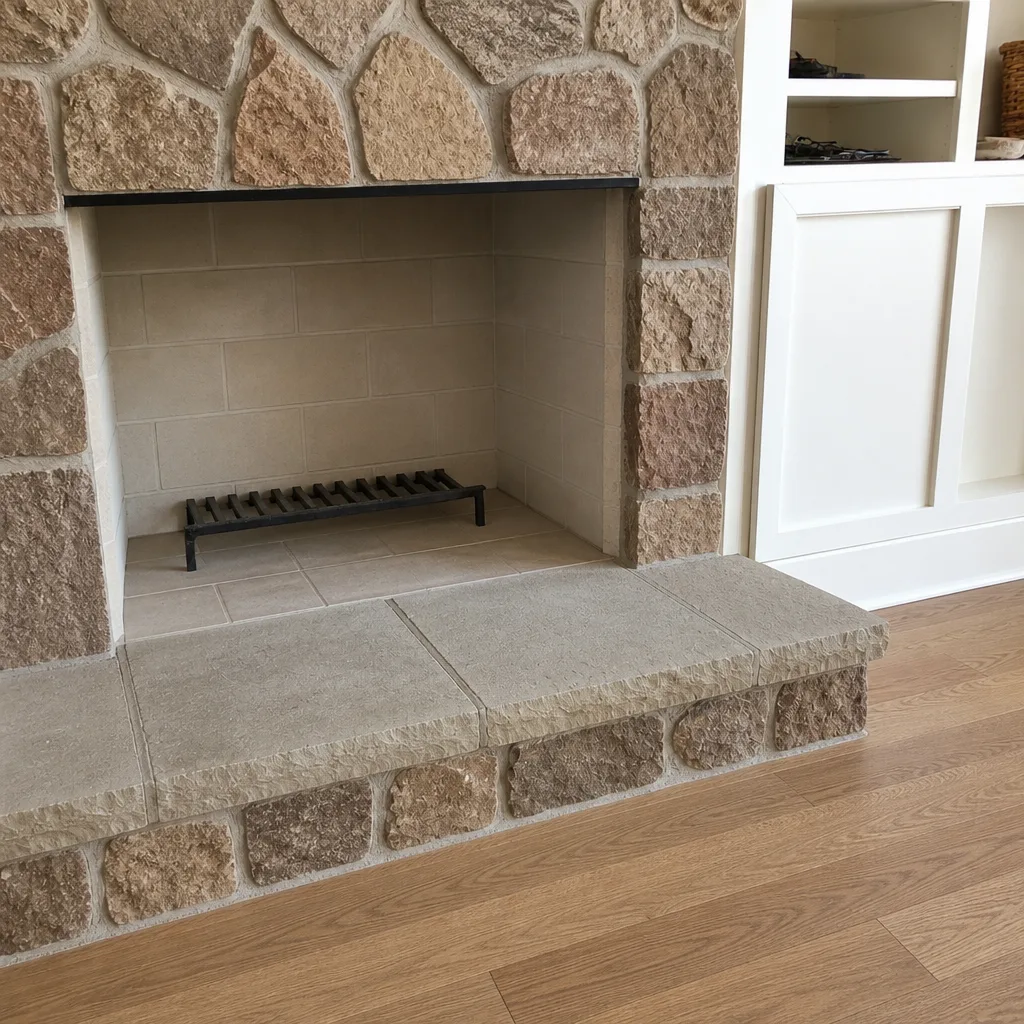 After
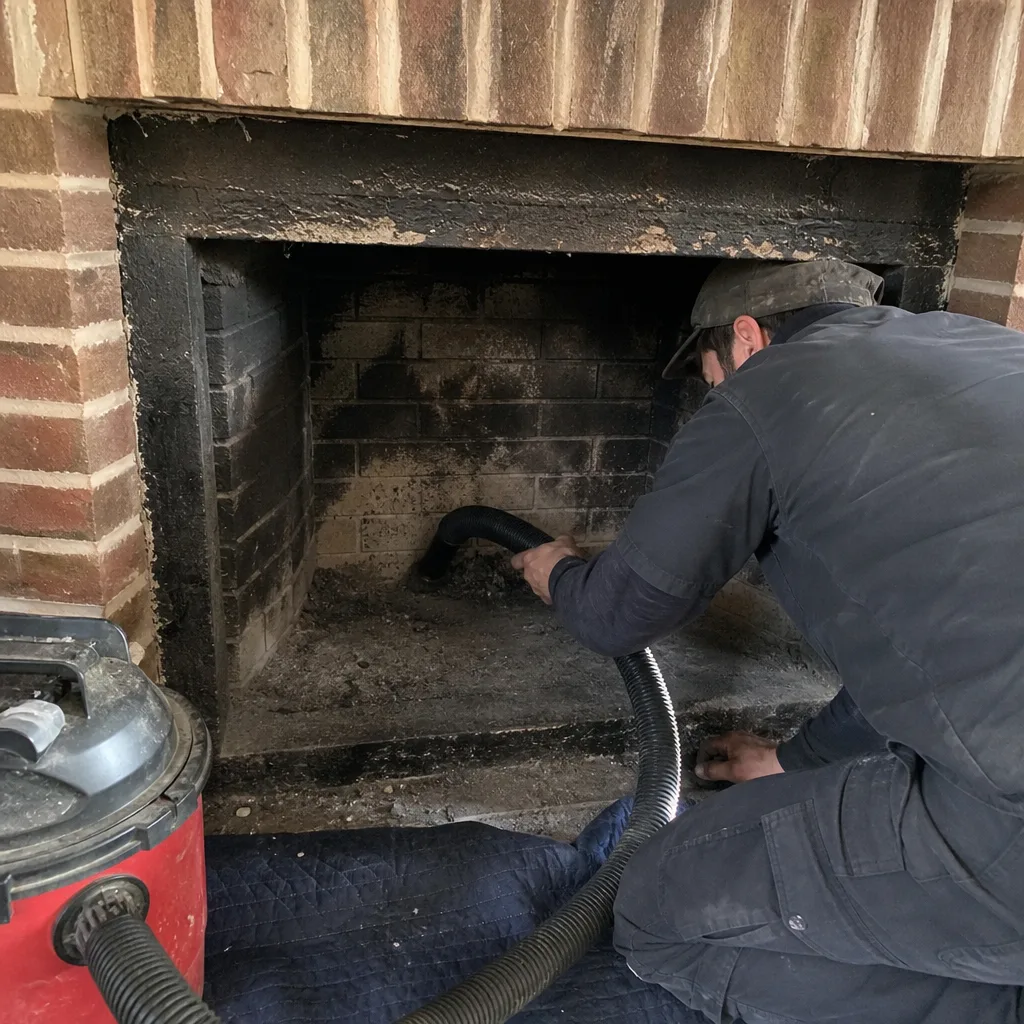 Before
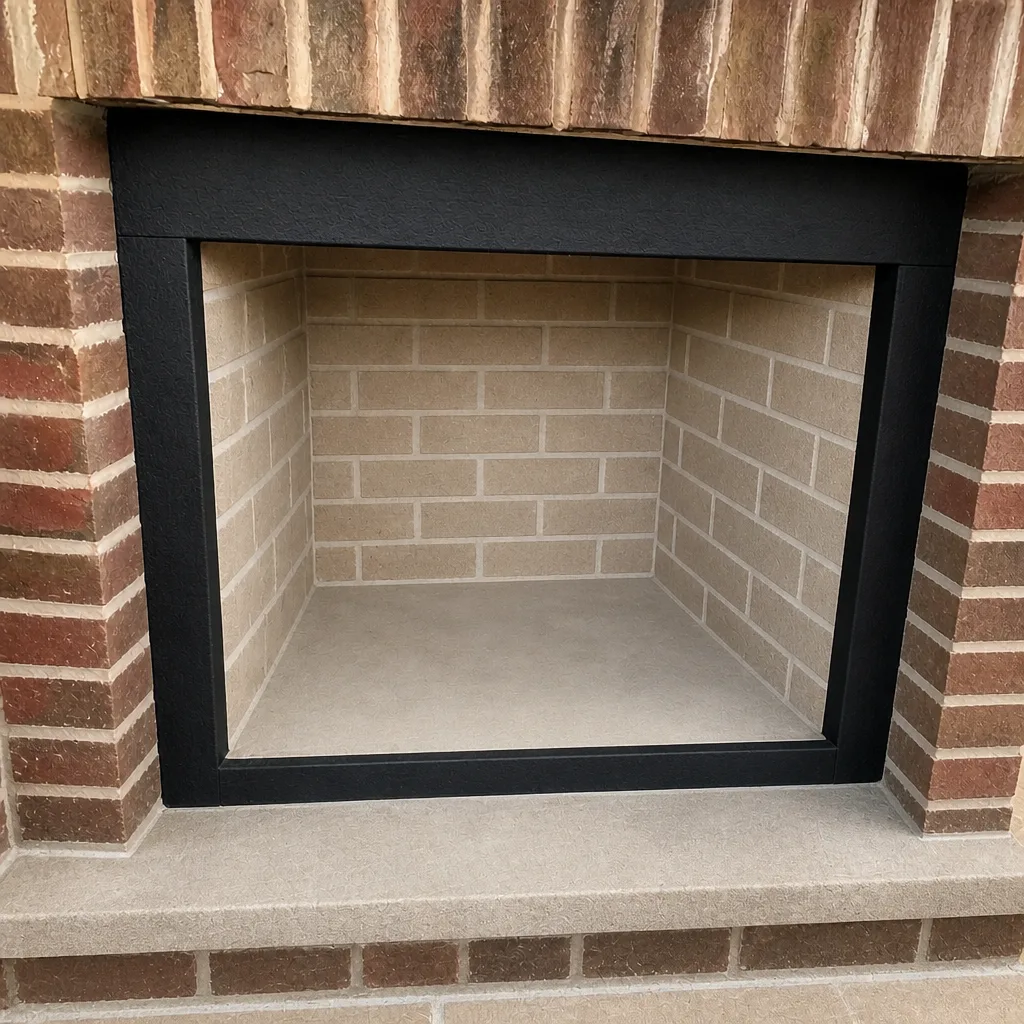 After
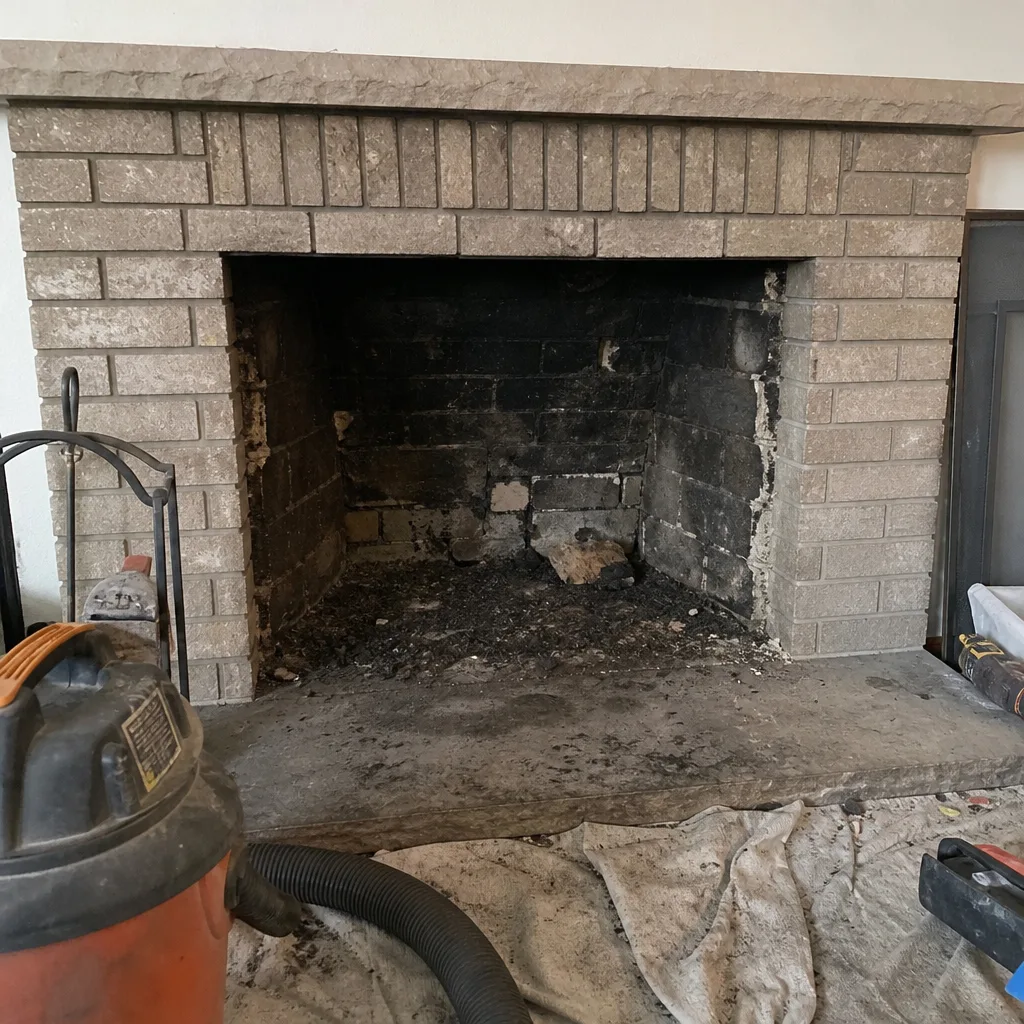 Before
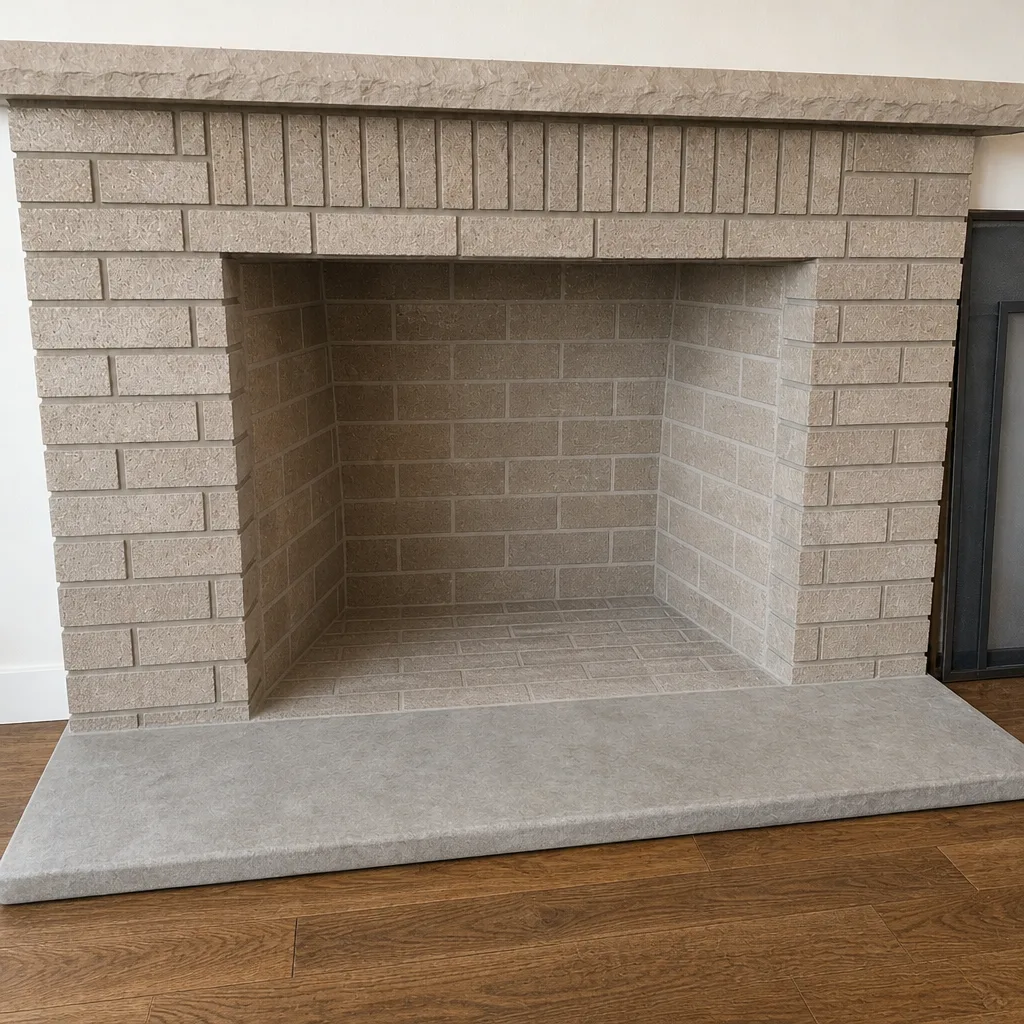 After
When to Call a Professional
Call a professional for anything involving a dirty flue, a firebox crack, a damaged crown, a cap that’s come loose, or any smell you can’t trace. Call immediately if you see or smell smoke backing into the room, hear a roaring sound from the flue, or notice creosote glaze on the flue walls, all of which point to a fire risk that needs a trained eye. Creosote buildup and flue cracks are not a do-it-yourself project; the fire hazard is serious and the diagnosis requires a light and a camera down the flue. Call for an inspection after any significant hail, and before you buy or sell a house in Thornton. Thornton Chimney Sweep Co offers free estimates in Thornton. Call (844) 443-4565 to book a sweep or an inspection.
Frequently Asked Questions
For most homes, once a year if you burn regularly, with the ideal timing in late August before heavy use. Heavy users (three or more cords a year) should add a mid-season visual check, and light users may stretch to every other year depending on what the inspection finds. Frequency should follow burn hours and buildup, not a fixed date. Call (844) 443-4565 for an exact quote; estimates are free.
Creosote builds up on the flue walls and becomes a fire hazard, and the draft gets restricted, which makes fires burn dirtier and produce even more creosote. Skipped inspections also let small cracks and crown damage grow through freeze-thaw cycles until they’re major repairs. It’s a compounding problem, and skipping the sweep rarely saves money across a few seasons. Call (844) 443-4565 for an exact quote; estimates are free.
Yes, if the storm was significant enough to damage roofs in your neighborhood. Hail dents caps, cracks chase covers, and lifts flashing, and the resulting leak often shows up weeks later as a ceiling stain. A post-storm check catches the damage before water gets in and freezes. Call (844) 443-4565 for an exact quote; estimates are free.
We strongly advise against it for anything beyond the firebox. Flue cleaning puts you on a roof around height, soot, and creosote, and it swallows a trained eye to spot a cracked liner or a failed joint. The fire risk from missed damage is serious. A professional sweep and inspection is a safer, more complete option. Call (844) 443-4565 for an exact quote; estimates are free.
No. Gas fireplaces don’t produce creosote, but the venting, logs, and pilot assembly still need an annual inspection, and the cap and crown still take weather. Skipping the inspection on a gas system misses venting problems that affect indoor air quality. Call (844) 443-4565 for an exact quote; estimates are free.
Late August is the strategic sweet spot, before heavy burning starts in November and before the October rush. Pair it with an April or May inspection after the burn season. Together the two appointments break the freeze-thaw cascade and enter the winter with a clean, sound flue. Call (844) 443-4565 for an exact quote; estimates are free.
The Bottom Line
Chimney care in Thornton runs on two threat windows, spring freeze-thaw and winter high use, and two preparation windows, late summer and early spring. A late-August sweep clears the flue before the heavy burn, a post-winter inspection catches the damage the thaw and hail left behind, a post-storm check protects the cap, chase, and flashing, and a summer look catches moisture and animals. Set the sweep frequency by burn hours, not the calendar, and skip the October habit. The homeowner who runs the two-window calendar spends less over time because every problem gets caught while it’s still a crack.
If it’s time to put your Thornton home on that calendar, we’re glad to help. We handle the full chimney, from the firebox floor to the crown cap, and we inspect before we recommend. Call (844) 443-4565 for a free estimate. We answer 24/7. Fast dispatch from 7am to 7pm, Sunday through Friday.
Written by the team at Thornton Chimney Sweep Co.